The 10 Best JDM Lures That Changed Bass Fishing
Walk into any serious bass angler's tackle room in America and you'll find them. Tucked between the Rapala crankbaits and the Zoom worms, there's a section of lures that look different. The paint jobs are more intricate. The hooks are sharper. The packaging is Japanese. And the price tags are higher.
Quick Answer
- Japanese Domestic Market (JDM) lures consistently set the standard for innovation, craftsmanship, and fish-catching ability -- many of the most influential bass lures ever made originated in Japan.
- The OSP Blitz, Megabass Vision 110, Jackall Soul Shad, and DUO Realis Spinbait 80 are among the most game-changing designs to cross the Pacific.
- Japan's annual Tackle of the Year (T.O.Y.) awards from Lure Magazine provide a reliable barometer of which lures genuinely perform, as voted by thousands of active anglers.
- JDM lures typically cost 20-40% more than domestic equivalents but feature tighter tolerances, more realistic finishes, and proprietary action tuning that justifies the premium.
Walk into any serious bass angler's tackle room in America and you'll find them. Tucked between the Rapala crankbaits and the Zoom worms, there's a section of lures that look different. The paint jobs are more intricate. The hooks are sharper. The packaging is Japanese. And the price tags are higher.
These are JDM lures -- Japanese Domestic Market baits that were designed for the hyper-competitive Japanese bass fishing scene, where 3 million anglers chase largemouth on lakes and reservoirs that would fit inside a single cove on Lake Fork. The pressure is relentless. The fish are educated. And the lures that survive in that environment tend to be extraordinary.
This isn't a list of the most popular lures. It's a list of the 10 JDM lures that fundamentally changed how bass are caught -- designs so innovative that they spawned entire categories, shifted tournament strategies, or simply outfished everything else so consistently that ignoring them became impossible.
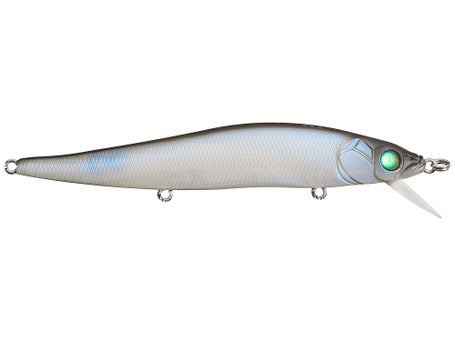
1. Megabass Vision 110 -- The Jerkbait That Rewrote the Rules
Source: Tackle Warehouse
Why It Matters
Before the Vision 110, most suspending jerkbaits were relatively crude tools: cast, jerk, pause, repeat. The Megabass Vision 110, designed by company founder Yuki Ito, introduced a level of refinement that the bass fishing world hadn't seen in a hard bait.
The lure's secret is its internal weight transfer system. Cast the bait and the tungsten balancers shift rearward for distance. On retrieve, they move forward, creating a nose-down posture that produces an incredibly tight, darting action on the jerk. On the pause, the lure suspends perfectly horizontal -- not nose-up, not tail-down -- at a precise depth.
The Impact
The Vision 110 essentially created the modern suspending jerkbait category. Every jerkbait designed after 2001 was benchmarked against it. In Japan's Lure Magazine T.O.Y. awards, the Vision 110 and its variants have appeared in the top 10 hard baits more than a dozen times. It remains the single best-selling jerkbait in Japanese bass fishing history.
In American tournaments, the Vision 110 became a staple for cold-water and post-frontal conditions. Tournament anglers reported catching fish on it when no other jerkbait would produce, particularly in the 45-55 degree water temperature range where bass become extremely selective.
Key Specs: 110mm, 14.2g, suspending, dives to 4-6 feet. Available in 50+ color patterns.
2. OSP Blitz -- The Crankbait Standard Since 2004
Why It Matters
Toshinari Namiki designed the OSP Blitz to solve a problem that plagued shallow crankbaits: inconsistent action at slow speeds. Most crankbaits need a moderate to fast retrieve to generate their wobble. The Blitz produces its tight, aggressive action even at painfully slow speeds, making it effective in cold water, post-frontal conditions, and high-pressure situations where bass won't chase fast-moving lures.
The Blitz also introduced OSP's proprietary high-pitch action -- a tight, rapid wobble with minimal lateral movement. This creates intense vibration without the wide, sweeping action that can spook fish in clear water.
The Impact
Since its 2004 release, the Blitz has been the most recommended shallow crankbait on Japanese bass fishing forums and media consistently for over two decades. It won the Lure Magazine T.O.Y. crankbait category multiple times and has remained a top-10 hard bait across almost every Japanese reader poll.
The Blitz proved that a crankbait could be a finesse tool -- not just a power-fishing search bait. That concept influenced an entire generation of Japanese crankbait design, leading to increasingly refined, tight-action shallow cranks from Jackall, Evergreen, and Daiwa.
Key Specs: 53mm, 9g, floating, dives to 3-6 feet. Also available in MR (medium runner) and EX-DR (extra deep runner) variants.
3. Jackall Soul Shad -- The Shad That Fishes Like a Jerkbait
Why It Matters
The Jackall Soul Shad blurred the line between a crankbait and a jerkbait. Its tight wobble, thin profile, and forward-weighted balance create a shad-like bait that can be fished on a steady retrieve or jerked and paused like a jerkbait. That versatility was new when it launched.
The original Soul Shad 52SP featured a magnetic weight transfer system that gave it casting distance well beyond what its small size would suggest. The bait's stability at high speeds was remarkable -- you could burn it through the water without it blowing out or rolling on its side, a problem that plagued most thin-profiled shad baits.
The Impact
The Soul Shad spawned the modern Japanese "shad" category -- a lure type that barely existed in Western bass fishing before Japanese designers explored it. Today, nearly every major Japanese manufacturer has a shad-style crankbait in its lineup, and the category has become a tournament mainstay.
The Soul Shad and its variants have appeared in the Lure Magazine T.O.Y. top rankings consistently, with the 68SP version being particularly dominant. It's one of the most versatile search baits ever designed -- equally effective fan-cast over flats, cranked along riprap, or jerked over submerged grass.
Key Specs: Available in 52SP (52mm, 5.5g), 58SP (58mm, 7.2g), and 68SP (68mm, 9.3g). All are suspending models.
4. DUO Realis Spinbait 80 -- The Spybait Revolution
Why It Matters
The Spinbait 80 didn't just create a new lure -- it created an entirely new technique. Spybaiting, as it became known in America, is a slow, straight-line retrieve with a sinking propbait that produces minimal vibration. It's the antithesis of everything power fishing stands for, and it works devastatingly well on pressured fish in clear water.
The lure's twin micro-propellers generate just enough vibration to register on a bass's lateral line without triggering the alarm response that louder lures create. The body itself barely wobbles -- it tracks in a straight line, imitating a small baitfish cruising without urgency.
The Impact
When Kevin VanDam won a major Bassmaster event with the Spinbait 80 in 2017, it validated what Japanese anglers had known for a decade: sometimes the most effective presentation is the one that does almost nothing. The lure sold out nationwide within weeks of VanDam's victory.
The Spinbait 80 opened American anglers' eyes to an entire philosophy of lure design -- the I-ji kei (I-character style) approach where minimal action, not maximum action, is the goal. It's influenced a new wave of "quiet" lures from both Japanese and American manufacturers.
Key Specs: 80mm, 9.48g, sinking. Also available in Spinbait 90 (90mm, 12.9g) and Spinbait 80 Shallow variants.
5. Bottom Up Beeble -- The Spinnerbait Reinvented
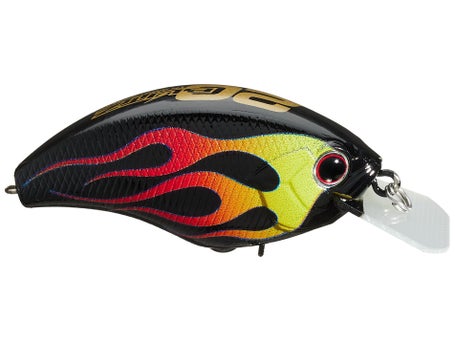 Source: Tackle Warehouse
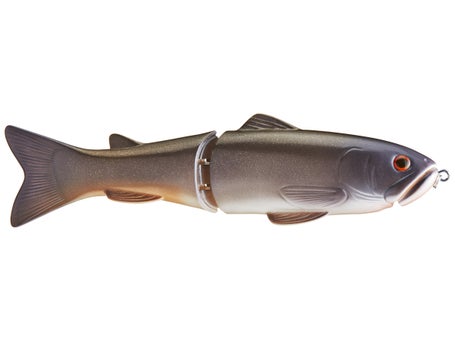 Source: Tackle Warehouse
Why It Matters
Spinnerbaits had been essentially unchanged for decades when Bottom Up released the Beeble. Designed by Shin Fukae and Kosuke Kawamura (who is widely known as one of the most innovative anglers in Japan), the Beeble introduced the "splitter" blade -- a blade design that creates a unique wobbling vibration different from any standard Colorado, Indiana, or willowleaf blade.
The splitter blade sits between the wire arms and produces a lateral rocking motion that standard spinnerbaits can't replicate. This creates a different vibration frequency that fish haven't been conditioned to ignore, giving the Beeble an edge on heavily fished waters.
The Impact
The Beeble won the Lure Magazine T.O.Y. Hard Lure category three consecutive years (2022-2024) -- an unprecedented run that confirmed it wasn't just a fad. It's been called "the spinnerbait that proved the category wasn't dead," arriving at a time when many Japanese anglers had largely abandoned spinnerbaits in favor of chatterbaits and swim jigs.
The Beeble's success revitalized the entire spinnerbait category in Japan. Sales of spinnerbaits across all brands increased measurably in the years following its release, and blade designs from other manufacturers began incorporating similar rocking concepts.
Key Specs: Available in 3/8oz and 1/2oz, with multiple blade color options. The signature splitter blade is the defining feature.
6. Megabass Pop-X -- The Topwater That Eats Like a Meal
Why It Matters
The Pop-X might be the most famous topwater lure in Japanese bass fishing history. Designed by Yuki Ito, it features a unique mouth design with a "water-grabbing lip" that produces a deep, resonant pop unlike any other popper. But what makes it legendary is what happens between the pops -- the lure sits motionless on the surface in a slightly nose-down posture, with its tail hook barely breaking the surface film, creating a visual trigger that provokes strikes during the pause.
The Pop-X also spits a controlled stream of water forward on each pop, imitating a baitfish feeding on the surface. This visual cue, combined with the acoustic pop, creates a multi-sensory presentation.
The Impact
Released in 1999, the Pop-X redefined what a popper could be. It showed that topwater lures could be finesse tools, not just fish-spooking noise makers. The lure has been in continuous production for over 25 years and remains one of Megabass's best-selling models.
In Japan, the Pop-X created a subculture of topwater finesse anglers who approach surface fishing with the same precision and subtlety that Japanese finesse anglers bring to soft-plastic techniques. It's not uncommon to see Japanese tournament pros dead-sticking a Pop-X for 30 seconds between pops -- a patience level that produces results but tests the discipline of most anglers.
Key Specs: 64mm, 7g, floating. Available in dozens of color patterns including limited editions that command collector prices.
7. Deps Slide Swimmer 250 -- The Swimbait That Started a Movement
Why It Matters
The Deps Slide Swimmer 250 didn't invent the swimbait, but it brought Japanese engineering precision to a category that was largely handmade and artisanal. At 250mm (nearly 10 inches) and 80g, it's a big-fish tool designed for targeting trophy largemouth.
The three-piece jointed body produces an S-curve swimming action that perfectly mimics a cruising trout, ayu, or large baitfish. The slow-sinking design allows it to be fished at various depths, from just under the surface to mid-depth over deep structure.
The Impact
The Slide Swimmer 250 helped establish Japan's big-bait culture -- a fishing philosophy that sacrifices bite frequency for trophy-class fish. On Lake Biwa, where the Japanese largemouth record of 10.12kg (22.31 lbs) was caught in 2009, big swimbait fishing became an obsession. The Slide Swimmer was at the center of that movement.
The lure's success in Japan helped drive the American big-swimbait movement of the 2010s, with California trophy hunters and Lake Fork specialists adopting the same philosophy. Production swimbait designs from both Japanese and American brands increasingly borrowed from the Slide Swimmer's jointed body template.
Key Specs: 250mm, 80g (standard), three-piece jointed body, slow sinking. Also available in 175mm and 145mm downsized versions.
8. Daiwa Steez Shad -- The Umbrella Rig Alternative
Why It Matters
While American anglers were tying Alabama rigs with five swimbaits to imitate a school of baitfish, Daiwa took a different approach. The Steez Shad was designed to imitate a fleeing baitfish so realistically that you only needed one. Its tight, high-frequency wobble and realistic scale pattern create an illusion of frantic movement that triggers reactive strikes.
The internal fixed-weight system keeps the lure perfectly balanced at all retrieve speeds, from dead-slow to burning. This consistency of action across a wide speed range makes it one of the most versatile shad-style baits ever made.
The Impact
The Steez Shad demonstrated that Japanese lure design could compete with multi-lure rigs by simply being more realistic. It reinforced the Japanese philosophy of precision over quantity -- one perfect imitation instead of five mediocre ones.
In Japan's tournament scene, the Steez Shad family became a go-to choice for covering water on pressured fisheries, particularly during fall shad-feeding patterns. It's credited with establishing Daiwa's hard-bait credibility in a market dominated by Megabass, OSP, and Jackall.
Key Specs: 54mm (5.2g), 60mm (6.3g), and 77mm (12.8g) versions available. Slow-floating and suspending models.
9. Jackall Aska 60 -- The Topwater Revolution
 Source: Tackle Warehouse
Why It Matters
The Jackall Aska 60 (also known as the Aska series) introduced the concept of a compact, high-performance pencil popper that could be "dog walked" with incredible precision. Before the Aska, most pencil baits were long, cigar-shaped lures that required aggressive rod work to walk side to side. The Aska's compact body and low center of gravity made it walk effortlessly with minimal rod-tip movement.
The Impact
The Aska established Jackall's reputation as a topwater innovator and influenced a wave of compact walking baits from Japanese manufacturers. The lure proved that smaller topwater presentations could be more effective than traditional large-profile topwater baits, particularly on pressured water where big splashes and loud pops were counterproductive.
Japanese topwater culture shifted noticeably after the Aska's success. More anglers began approaching topwater fishing with finesse mindsets, using smaller lures, lighter line, and subtler presentations. The same philosophy that produced the Neko rig and spybaiting had arrived on the surface.
Key Specs: 60mm, 5g, floating. The compact profile belies its impressive casting distance thanks to internal weight shifting.
10. Raid Japan Dodge -- The Prop Bait Reborn
Why It Matters
Prop baits were considered relics -- topwater curiosities from the 1960s and 70s that most serious anglers had abandoned. Then Kanami Okada of Raid Japan released the Dodge, and the category exploded.
The Dodge features oversized wings (not traditional propellers) that create a unique "clacking" sound and water disturbance on a dead-slow retrieve. It can be retrieved so slowly that it barely moves forward, producing a rhythmic clack-clack-clack that bass find irresistible. The lure works best at retrieve speeds where most topwater lures simply stop functioning.
The Impact
The Dodge became a T.O.Y. top 10 staple in Japan, with multiple variants appearing in the rankings year after year. Its dead-slow capability opened up an entirely new approach to topwater fishing -- the "dead-slow surface game" where the lure is barely moving, creating a subtle surface disturbance that triggers strikes from bass that ignore faster presentations.
The Dodge's success spawned an entire category of "slow-surface" lures from Japanese manufacturers, with big wings, paddle tails, and other appendages designed for creating action at minimum retrieve speeds. It proved that topwater fishing could be as finesse-oriented as bottom fishing.
Key Specs: 114mm, 18.5g, floating. Dead-slow retrieve is the primary presentation. Also available in Dodge Jr. (100mm, 12g) for lighter tackle applications.
Honorable Mentions
These lures didn't make the top 10 but deserve recognition:
- Evergreen Jack Hammer (Chatterbait) -- Morizo Shimizu's design became the global chatterbait standard, winning tournaments on both sides of the Pacific
- OSP DoLive Shad -- a soft-plastic swimbait that changed how Japanese anglers approach mid-depth fishing
- Megabass Ito Shiner -- Yuki Ito's original I-ji kei minnow, a precursor to the spybaiting technique
- Daiwa Tiny Peanut -- the diminutive crankbait that proved micro-cranks could catch big fish
- Lucky Craft Pointer 100 -- one of the first JDM jerkbaits to gain serious traction in American tournaments
Why JDM Lures Keep Raising the Bar
Manufacturing Precision
Japanese lure manufacturing operates at tolerances that most Western companies don't attempt. A Megabass Vision 110 goes through hand-tuning after machine assembly to ensure its swim action matches the design specification exactly. OSP runs each Blitz through a water tank test before packaging. This attention to quality control means that two Vision 110s pulled randomly from a tackle shop shelf will swim identically -- something you cannot say about most mass-produced American hard baits.
The Pressure Factor
Japan's bass waters produce the most pressured fish on the planet. An estimated 3 million active bass anglers fish lakes and reservoirs that collectively hold a fraction of the acreage available in the United States. The competition isn't just angler versus fish -- it's angler versus angler versus fish that has seen 50 lures this week.
This environment forces innovation. Lures that work on Japan's pressured waters tend to work everywhere, because the design requirements for catching educated fish (realistic action, subtle vibration, precise weight balance) produce inherently better lures.
Design Philosophy
Western lure design tends to prioritize "catching anglers" -- bold colors, aggressive action, and marketing claims that sell product. Japanese lure design tends to prioritize "catching fish" -- subtle refinements in balance, action, and vibration that may not look impressive on a shelf but perform better in the water.
This isn't to say Japanese companies don't market aggressively -- they do. But the underlying design culture values empirical performance over shelf appeal. A lure that consistently catches fish in Japanese field testing will get produced even if it doesn't look exciting.
Use our Lure Selector Tool to find the right JDM lure for your specific conditions, water clarity, and target depth.
How to Buy JDM Lures
Direct Import
Websites like Tackle Warehouse Japan, Japan Lure Shop, and Digitaka ship JDM tackle directly from Japan. Expect to pay retail Japanese prices (typically 1,200-2,500 yen for hard baits, roughly $8-17 USD) plus shipping of $10-25 depending on speed and package size.
U.S. Distribution
Many JDM brands now have official U.S. distribution. Megabass, DUO, Jackall, and OSP all sell through American tackle retailers. However, the U.S. product line typically includes only a fraction of the color patterns and model variants available in Japan. If you want the full range, importing is the way.
Authenticity
Counterfeit JDM lures are a real problem, particularly on Amazon and eBay. Fake Megabass and Jackall lures often look convincing in photos but use inferior hooks, paint, and weight systems. Buy from authorized retailers or directly from Japanese shops.
Frequently Asked Questions
Are JDM lures really better than American lures?
For finesse applications on pressured water, generally yes. The manufacturing precision and design philosophy produce lures with tighter action tolerances and more realistic presentations. For power fishing in open water with aggressive fish, the gap narrows considerably. A $4 American squarebill will catch just as many bass as a $15 JDM crankbait when the fish are actively feeding. The JDM advantage shows most clearly in tough conditions.
Why are JDM lures more expensive?
Tighter manufacturing tolerances, higher-quality components (Gamakatsu or Owner hooks instead of generic trebles), hand-tuned swim testing, and smaller production runs all contribute. A Megabass factory in Japan employs hand-tuners who adjust each lure's lip angle and weight position until it meets specification. That labor costs money.
What's the best JDM lure for a beginner?
The OSP Blitz. It's nearly foolproof -- the tight action works at any speed, the shallow-diving lip deflects off cover effectively, and the lure size matches baitfish profiles that bass eat everywhere. Cast it near structure, reel it back at a moderate pace, and let the lure do the work.
Can I find JDM lure colors at American tackle shops?
Major JDM brands sold in the U.S. (Megabass, Jackall, DUO, Lucky Craft) offer a selection of colors through domestic retailers, but typically only 30-50% of the patterns available in Japan. Many of the most effective natural patterns -- Ghost Wakasagi, Ayu, and region-specific baitfish imitations -- are Japan-only releases. Check our Seasonal Calendar for which patterns match seasonal forage in your region.
Do professional tournament anglers really use JDM lures?
Extensively. On both Japanese and American tournament circuits, JDM lures are standard equipment. The Evergreen Jack Hammer (chatterbait), Megabass Vision 110 (jerkbait), Jackall Soul Shad (shad crank), and DUO Spinbait 80 (spybait) have all been winning lures in major professional events. Japanese tournament results from the JB/NBC circuit show that the top 10 T.O.Y. lures account for roughly 40% of all winning patterns in a given season.
Related Reading
- Spybaiting: The Japanese Bass Technique America Just Discovered
- Neko Rig vs. Wacky Rig: What Japanese Anglers Actually Prefer
- Japanese Finesse Fishing: Why Japan's Pressured Waters Breed Better Techniques
-- The JDM Tackle Lab Team