Japanese Baitcasting Reels: Why Shimano and Daiwa JDM Models Are Different
The reel hanging under your baitcasting rod right now might say "Shimano" or "Daiwa" on the side. But if you bought it at an American tackle shop, it's not the same reel that Japanese tournament pros are fishing.
Quick Answer
- JDM (Japanese Domestic Market) baitcasting reels from Shimano and Daiwa often feature different spool sizes, brake systems, gear configurations, and cosmetic finishes than the international models sold in the U.S. and Europe -- even when the model names are identical.
- Shimano's JDM lineup includes flagships like the Antares (37mm spool, centrifugal brake) and Aldebaran BFS (29mm spool, baitfinesse specialist) that have no direct international equivalents, while the JDM Metanium uses a narrower 34mm/19mm spool versus the wider spool on some international versions.
- Daiwa's JDM Steez CT SV TW and Zillion SV TW feature the brand's latest SV Boost spool technology and Hyper Drive Design gearing that may arrive in international markets 6-12 months later -- or not at all.
- JDM reels typically cost 15-30% less in Japan than the same (or equivalent) models at U.S. retail, making direct import through [proxy services](/how-to-buy-jdm-tackle-from-japan-guide) a financially attractive option for anglers who want the best Japanese engineering has to offer.
The reel hanging under your baitcasting rod right now might say "Shimano" or "Daiwa" on the side. But if you bought it at an American tackle shop, it's not the same reel that Japanese tournament pros are fishing.
That's not a quality judgment. International Shimano and Daiwa reels are excellent products. But the JDM versions -- the reels designed by Japanese engineers for the Japanese market, sold in Japanese tackle shops, and fished by Japanese pros on waters like Lake Biwa and Kasumigaura -- are often different machines. Different spool dimensions. Different brake tuning. Different gear specifications. Sometimes different materials entirely.
The differences aren't arbitrary. They reflect the specific demands of Japanese bass fishing, where finesse techniques on pressured water require a level of casting precision and versatility that the broader international market doesn't always prioritize. Understanding those differences helps you choose the right reel -- whether you buy JDM or not.
Why JDM Reels Exist at All
Source: Tackle Warehouse
The Market Split
Shimano and Daiwa are global companies with global product lines. But they don't sell identical products everywhere. The reasons are practical:
-
Fishing styles differ by region. Japanese bass anglers throw lighter lures more frequently than their American counterparts. A reel optimized for 3/16 oz jigheads and 4-inch worms (common in Japan) needs different spool dynamics than one optimized for 1/2 oz jigs and 7-inch worms (common in America).
-
Price expectations differ. Japanese anglers have historically been willing to pay more for premium tackle. A ¥55,000 ($367 USD) baitcasting reel is a mainstream purchase in Japan. In the U.S., that's flagship territory. This allows Japanese product planners to spec higher-grade components for the domestic market without pricing themselves out.
-
Regulatory and distribution economics. Different markets have different import regulations, warranty structures, and dealer networks. It's sometimes simpler and more profitable to develop market-specific models than to sell one global product.
-
Development cycle timing. New technologies typically debut in JDM models first, then roll out to international markets 6-18 months later. If you want the latest brake system or spool technology from either company, JDM is where it appears first.
What "JDM" Actually Means
When anglers say "JDM reel," they specifically mean a model manufactured for and sold in the Japanese domestic market. These reels are:
- Sold through Japanese retail channels (tackle shops, Rakuten, Amazon Japan, Yahoo Shopping)
- Packaged with Japanese-language manuals and warranty cards
- Covered by Japanese domestic warranty (not valid internationally)
- Priced in Japanese yen at Japanese retail pricing
- Sometimes labeled differently than international equivalents
The warranty issue is important. If you import a JDM reel and it needs service, you typically can't send it to Shimano USA or Daiwa USA for warranty repair. You'd need to send it back to Japan (or to an independent reel technician domestically). For many anglers, the performance advantages outweigh this inconvenience. For others, the domestic warranty on international models provides peace of mind worth the potential spec differences.
Shimano JDM vs. International: Model-by-Model Breakdown
Antares -- The JDM Flagship
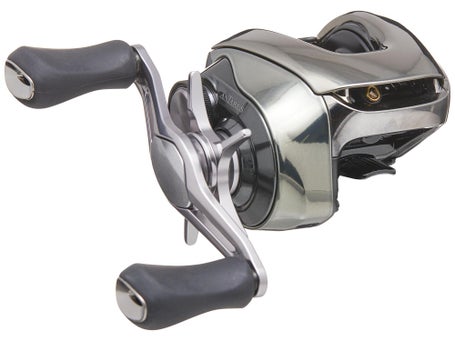
The Shimano Antares is the crown jewel of Shimano's JDM baitcasting lineup, and it has no direct international equivalent. While Shimano has sold various Antares-branded reels internationally at different times, the core Antares line is a Japan-market product.
2025 Antares (25 Antares)
The latest generation features Shimano's most advanced centrifugal brake system paired with the MGL Spool IV in a 37mm diameter, 21mm width configuration. Key specs:
- Weight: 220g
- Gear ratios: 5.6:1 (HG) and 7.4:1 (XG)
- Line capacity: 14 lb nylon / 100m
- Brake: SVS Infinity+ centrifugal brake
- Spool: MGL Spool IV (37/21mm)
- Bearings: 10+1
- Max drag: 5kg
The Antares is built around one premise: maximum casting distance with mid-weight lures (10-20g / 3/8-3/4 oz). The 37mm spool is larger than the 34mm spool on the Metanium, giving it more line pickup per revolution and better distance with heavier lures. The centrifugal brake produces what Shimano calls "back-end extension" -- minimal braking in the second half of the cast, allowing the lure to carry further than magnetically braked reels.
Japanese tournament pros prize the Antares for situations that demand distance: fishing expansive flats on Lake Biwa, working long points on reservoirs, and making cross-wind casts with medium-weight lures. It's not a finesse reel (the 220g weight and 37mm spool are overkill for light lures) -- it's a precision distance weapon.
International equivalent: None directly. The Shimano Curado DC and SLX DC serve a similar market position internationally but use DC (Digital Control) braking rather than the Antares' centrifugal system, and feature different spool dimensions and body designs.
Metanium -- The Versatile Standard
The Metanium is arguably the most important baitcasting reel in Japanese bass fishing. It's the do-everything reel that most serious JDM anglers own at least one of, and its balance of light weight, casting performance, and versatility has made it a benchmark for over two decades.
Current JDM Metanium
- Weight: 175g
- Spool: 34mm diameter, 19mm width (narrow)
- Gear ratios: 6.2:1 (Normal), 7.1:1 (HG), 8.1:1 (XG)
- Line capacity: 12 lb nylon / 100m
- Brake: SVS Infinity centrifugal
- Bearings: 10+1
- Max drag: 5kg
The JDM Metanium's defining characteristic is its narrow spool (19mm width). A narrow spool reduces line lay issues and improves casting accuracy with lighter lures. Japanese anglers who fish 7-14g (1/4-1/2 oz) lures all day -- which describes most Japanese bass fishing -- find the narrow spool casts these weights more efficiently than wider spools designed for heavier American-style lures.
International Metanium/equivalent: Shimano has released international Metanium variants with different spool widths and configurations. The international market has also seen the Metanium DC (with digital braking) that differs from the JDM centrifugal-braked version. Always check the specific spool dimensions and brake type when comparing JDM and international models that share the Metanium name.
Aldebaran BFS -- The Baitfinesse Specialist
The Aldebaran BFS (Bait Finesse System) represents a category that barely exists in American bass fishing but dominates a significant portion of Japanese technique: baitfinesse casting.
Baitfinesse uses specially designed baitcasting reels to cast ultralight lures (1-5g / 1/32-3/16 oz) on baitcasting tackle. This allows anglers to fish finesse presentations with the precision and accuracy of a baitcaster rather than the longer, less controllable arcs of a spinning rod.
JDM Aldebaran BFS
- Weight: 130g (one of the lightest baitcasters ever made)
- Spool: 29mm diameter, shallow (ultralight optimized)
- Brake: FTB (Finesse Tune Brake) magnetically controlled
- Line capacity: 6 lb nylon / 45m
- Bearings: 10+1
The Aldebaran BFS is a purpose-built tool for finesse fishing on pressured water. Japanese anglers use it to pitch tiny jigs, skip small worms under docks, and cast 2-inch crankbaits into pockets that spinning reels can't reach with the same accuracy.
International equivalent: Limited. Some international Shimano models offer BFS configurations, but the Aldebaran BFS's ultralight weight (130g) and specialized shallow spool aren't consistently available outside Japan.
Calcutta Conquest -- The Round Reel Icon
The Calcutta Conquest is Shimano's premium round-body baitcaster, beloved for its smooth operation and elegant machined aluminum construction. The JDM versions are available in configurations (particularly the smaller 100/101 sizes) that emphasize the compact, lightweight approach Japanese anglers prefer.
- Weight: 200-220g depending on size
- Full machined aluminum body
- Micromodule Gear for extreme smoothness
- Available in both conventional and BFS-tuned versions
The Conquest BFS variant is particularly popular in Japan for anglers who want the round reel aesthetic and build quality but need to cast light lures. It's become something of a cult object among Japanese bass anglers who value craftsmanship as much as performance.
Daiwa JDM vs. International: The SV Technology Advantage
Understanding Daiwa's Brake Philosophy
While Shimano built its reputation on centrifugal braking (mechanical friction), Daiwa pioneered magnetic braking through its Magforce system. The key evolution in recent years is the SV (Stress-free Versatile) spool concept, which combines a specially designed spool with an integrated inductor brake to reduce backlash across a wider range of lure weights.
The latest evolution -- SV Boost -- debuted in JDM models first and represents Daiwa's most advanced spool technology. SV Boost uses a two-stage magnetic brake that applies strong initial braking at the cast's start (when backlash risk is highest) and then progressively reduces braking force as the spool slows, maximizing distance.
Steez -- Daiwa's JDM Flagship
The Steez sits at the apex of Daiwa's baitcasting lineup, and its JDM versions have consistently been 6-12 months ahead of international releases in technology adoption.
Current JDM Steez Models
The Steez family includes multiple specialized variants:
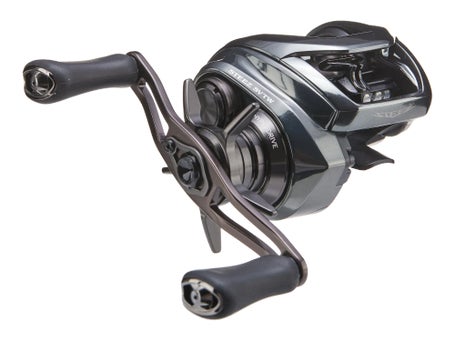
- Steez SV TW: The all-around flagship. Features Hyper Drive Design gearing (a redesigned gear tooth profile that maintains smooth operation under load), SV Boost spool, and an air-brake system. Weight around 160-170g depending on configuration.
- Steez CT SV TW: The compact/technical version with a smaller 30mm SV Boost spool optimized for lighter lures (3-14g). At approximately 150-155g, it's one of the lightest full-featured baitcasters Daiwa produces.
- Steez A TW: The power version with a larger spool for heavier applications (flipping, big baits).
The Hyper Drive Design gearing system is a key JDM-first technology. It redesigned the fundamental tooth profile of the drive gear and pinion gear to increase contact area, resulting in smoother operation that maintains its quality over time. When Daiwa introduced this in JDM Steez models, it took roughly a year before the technology appeared in international models.
International equivalent: International Steez models exist but may use previous-generation spool and gear technology. The Steez CT SV TW's compact format is particularly JDM-focused, as the international market tends to favor larger spools for heavier American-style applications.
Zillion -- The Performance Value Play
The Daiwa Zillion occupies the sweet spot below the Steez flagship but above entry-level models. In Japan, it's the reel that working anglers -- guides, semi-pro tournament competitors, and serious recreational fishermen -- fish every day.
JDM Zillion SV TW
- Weight: 175g
- Spool: 34mm SV Boost
- Gear ratios: 6.3:1, 7.1:1, 8.5:1
- Hyper Drive Design gearing
- Line capacity: 14 lb / 90m
- Max drag: 5kg
The JDM Zillion offers approximately 85-90% of the Steez's performance at 60-70% of the price. For most anglers, the functional differences between a JDM Zillion and a JDM Steez are negligible on the water. The Steez is slightly lighter, slightly smoother out of the box, and has a marginally better drag system. But the Zillion casts the same lures the same distances with the same accuracy.
JDM Zillion TW HD (Heavy Duty)
For anglers who need more power -- big bait fishing, heavy cover flipping, or saltwater applications -- the Zillion TW HD offers a reinforced frame, larger spool, and stronger drag system. It's a popular choice among Japanese anglers who fish Biwa's heavy-cover shoreline and need a reel that can winch 10-pound bass out of submerged timber.
Tatula -- Entry to Mid-Range Excellence
The Daiwa Tatula is where JDM and international markets converge most closely. International Tatula models are widely available and generally similar to their JDM counterparts.
The 2025 JDM Tatula SV TW received the 32mm SV Boost spool -- technology that debuted in the flagship Steez. This means a reel in the ¥20,000-25,000 ($133-167) price range now gets the same spool technology as a reel costing ¥60,000+ ($400+). Daiwa claims the 2025 Tatula can cast 3g lures 30 meters and 15g lures 50-60 meters -- performance that was flagship-only territory just a few years ago.
The Technology Gap: What JDM Gets First
 Source: Tackle Warehouse
Shimano's Innovation Pipeline
Shimano's technology rollout follows a consistent pattern:
- New technology debuts in JDM flagship (Antares, Metanium)
- Refined version appears in JDM mid-range (Scorpion, Aldebaran) within 1-2 years
- Technology rolls into international flagships (Curado, Chronarch equivalent) 6-18 months after JDM mid-range
- Budget international models get the technology 2-3 years after initial JDM debut
Recent technology that followed this pattern:
- MGL (Magnumlite) Spool: Debuted in JDM models, then rolled to international lineup
- Micromodule Gear: JDM first, international 12-18 months later
- SVS Infinity brake refinements: Each generation appears in JDM before international
Daiwa's Innovation Pipeline
Daiwa follows a similar pattern:
- JDM Steez gets new technology first
- JDM Zillion gets it within the same year or next model year
- JDM Tatula gets a cost-optimized version 1-2 years later
- International models receive the technology on their own refresh cycles
The SV Boost spool is the most recent example. It appeared in JDM Steez first, then JDM Zillion, then the 2025 JDM Tatula. International models are receiving it on their own timeline.
Practical Differences on the Water
Casting Light Lures (1-7g / 1/32-1/4 oz)
This is where JDM reels show their biggest advantage. Japanese bass fishing relies heavily on light lures -- small jigs, Neko rigs, tiny crankbaits, and finesse soft plastics that weigh under 7g.
JDM reels are optimized for this range through:
- Narrower, lighter spools that require less energy to start spinning (less lure weight needed to get the cast going)
- More precisely tuned braking that prevents backlash at low spool speeds without killing distance
- Lighter overall weight that reduces fatigue during the hundreds of casts per day that finesse fishing demands
If you regularly cast lures under 1/4 oz on baitcasting tackle, JDM reels will outperform most international equivalents in this weight range.
Casting Mid-Weight Lures (7-21g / 1/4-3/4 oz)
This is the universal sweet spot where JDM and international reels perform most similarly. Both are designed to handle this range effectively, and the practical differences in casting distance and accuracy are minimal.
The edge JDM reels maintain is in brake precision -- the ability to dial in a brake setting that's perfectly tuned for a specific lure weight, rather than a setting that works "well enough" across a range. Japanese anglers routinely adjust their brake for each lure change, a practice that's less common (but equally effective) among American anglers.
Casting Heavy Lures (21g+ / 3/4 oz+)
For heavy lures, big baits, and power applications, the international reel market is often better served by models with larger spools, higher line capacities, and beefier drag systems. JDM reels tend to be smaller and lighter, which can be a disadvantage when you need raw winching power and large line capacity.
That said, JDM power reels like the Steez A TW, Zillion TW HD, and Antares DC MD are fully capable power reels. They just represent a smaller segment of the JDM lineup compared to the international market, where power fishing is a more dominant style.
Third-Party JDM Reels: Abu Garcia and Beyond
While Shimano and Daiwa dominate the JDM baitcasting market with an estimated 85%+ combined market share, other manufacturers offer JDM-specific models worth knowing about.
Abu Garcia JDM Models
Abu Garcia maintains a significant JDM lineup through its Japanese distributor, Pure Fishing Japan. The JDM Revo series includes models not available internationally:
- Revo ALC-BF7: A baitfinesse specialist weighing 141g with a 33mm spool designed for 1-7g lures. Positioned against the Shimano Aldebaran BFS and Daiwa Alphas Air series.
- Revo EXD: An extreme distance reel designed for shore fishing applications (seabass, light shore jigging) that Japanese anglers have adopted for long-range bass fishing on large reservoirs.
Abu Garcia JDM models offer a different aesthetic and mechanical feel than Shimano and Daiwa -- more of a Western reel sensibility with Japanese market tuning. Some anglers prefer the ergonomics and drag systems of Abu designs, particularly for power applications.
Tailwalk, Megabass, and Boutique Options
Several smaller Japanese companies produce baitcasting reels for the domestic market:
- Shimano OEM private labels: Some Japanese rod manufacturers sell reels built on Shimano platforms with custom cosmetics and tuning.
- Megabass reels: Megabass has produced limited-run baitcasting reels (like the Lin series) that are collector's items as much as fishing tools.
These boutique options represent a tiny fraction of the market but appeal to anglers who want something distinctive.
Maintenance Differences: JDM vs. International
 Photo by CalinPikeFishingPro on Pixabay
JDM reels and international reels use the same basic maintenance principles, but there are practical differences:
Lubricants
Japanese manufacturers specify particular greases and oils for their reels. Shimano's service centers use proprietary lubricants (Shimano DG-1 grease, Shimano oil) that differ from what third-party technicians might use. The JDM market has a much wider selection of aftermarket reel lubricants from companies like IOS Factory, HEDGEHOG STUDIO, and Boca Bearings Japan.
Bearing Upgrades
Upgrading stock bearings to premium ceramic or stainless steel bearings is extremely popular in the JDM market. Aftermarket bearing suppliers like HEDGEHOG STUDIO sell complete bearing kits specific to each JDM model number. A full ceramic bearing upgrade on a Metanium or Steez runs approximately ¥8,000-15,000 ($53-100 USD) and can meaningfully improve casting performance, particularly with light lures.
Spool Tuning
JDM aftermarket companies offer replacement spools in different materials, depths, and weights. A shallow spool conversion on a standard reel can transform it into a baitfinesse-capable tool. Companies like SLP Works (Daiwa's custom parts division) and Avail sell dozens of aftermarket spool options for popular JDM reels.
This aftermarket ecosystem is much richer in Japan than in the U.S. market. If you enjoy tuning and customizing reels, the JDM platform gives you significantly more options to work with.
Should You Buy JDM?
Buy JDM If You:
- Fish primarily with lures under 1/2 oz
- Value casting precision over raw power
- Want the latest technology 6-18 months before international release
- Are comfortable with no domestic warranty
- Enjoy the process of importing and buying from Japan
- Fish baitfinesse techniques regularly
Buy International If You:
- Fish primarily with lures 1/2 oz and heavier
- Value domestic warranty and local service
- Prefer the convenience of buying at local tackle shops
- Don't need the specific JDM-only models
- Fish primarily power techniques (flipping, cranking, swimbaits)
The Hybrid Approach
Many serious anglers maintain both JDM and international reels. JDM reels go on finesse and light-application rods. International reels go on power rods. This gives you the best of both worlds -- precision casting for light work and robust power with full warranty coverage for heavy applications.
Real-World JDM Reel Comparisons: Head to Head
To make the JDM vs. international decision concrete, here are three common matchups:
Shimano JDM Metanium vs. International Curado DC
The JDM Metanium (centrifugal brake, 34mm/19mm narrow spool, 175g) vs. the international Curado DC (digital brake, wider spool, ~205g). The Metanium is lighter by 30g, casts lighter lures more efficiently due to its narrow spool, and offers the mechanical simplicity of centrifugal braking. The Curado DC provides digital brake convenience (set it and forget it across multiple lure weights) and a wider spool that handles heavier lines better. For finesse-to-moderate applications, the Metanium wins. For versatility across a wide lure range, the Curado DC is more forgiving.
Daiwa JDM Steez CT SV TW vs. International Tatula Elite
The JDM Steez CT (30mm SV Boost spool, ~150g, Hyper Drive gearing) vs. the international Tatula Elite (~175g, SV spool). The Steez CT is purpose-built for light lures -- its 30mm spool turns over with less energy than any 34mm spool, making it exceptional for 3-10g presentations. The Tatula Elite is a more versatile mid-range reel that handles a broader spectrum of lure weights. The Steez CT is the better reel for JDM-style fishing; the Tatula Elite is the better reel for general-purpose American bass fishing.
Shimano JDM Aldebaran BFS vs. International SLX BFS
The JDM Aldebaran BFS (130g, 29mm spool, FTB brake) vs. the international SLX BFS (~170g, 33mm spool). This isn't even close for pure baitfinesse applications. The Aldebaran is 40g lighter with a smaller spool that starts spinning with less lure weight. It will cast 2g lures accurately where the SLX BFS struggles below 3.5g. But the Aldebaran costs roughly 3x more. The SLX BFS is the value play for anglers exploring baitfinesse; the Aldebaran is the tool for anglers committed to the technique.
JDM Reel Buying Guide: Price Ranges
| Category | JDM Price (JPY) | JDM Price (USD) | International Equivalent (USD) | JDM Savings |
|---|---|---|---|---|
| Entry BFS | ¥15,000-25,000 | $100-167 | $130-200 | 15-25% |
| Mid-range versatile | ¥25,000-40,000 | $167-267 | $200-350 | 15-25% |
| Flagship versatile | ¥45,000-65,000 | $300-433 | $350-500 | 10-20% |
| Ultra-premium | ¥70,000-90,000 | $467-600 | $500-700+ | 5-15% |
Note: These are approximate comparisons. Exact savings depend on current exchange rates, specific models, and where you purchase.
Frequently Asked Questions
Can I get a JDM reel serviced in the United States?
Not through official Shimano USA or Daiwa USA warranty service. However, numerous independent reel technicians in the U.S. specialize in JDM reels and can perform maintenance, part replacements, and upgrades. Parts are available through Japanese online retailers and proxy services. For routine maintenance (cleaning, lubrication, bearing replacement), any competent reel technician can service a JDM reel.
Do JDM reels use different parts than international models?
Sometimes. Even when models share a name, the internal components (spools, brake units, gears, bearings) may differ between JDM and international versions. This means you can't always swap parts between versions. Before buying replacement parts, verify the specific model number and market designation (JDM vs. international) to ensure compatibility.
Are JDM reels higher quality than international models?
Not necessarily "higher quality" in terms of materials or construction, but they are often optimized differently. JDM reels tend to prioritize light-lure casting performance, light weight, and compact size. International models may prioritize line capacity, drag power, and versatility across heavier applications. The "best" reel depends on how you fish.
What is the best JDM baitcasting reel for a first-time JDM buyer?
The Daiwa Zillion SV TW is the most commonly recommended first JDM reel. It offers flagship-level performance (SV Boost spool, Hyper Drive gearing) at a price point ¥15,000-20,000 below the Steez. It's versatile enough for most bass fishing applications and well-built enough to last years with basic maintenance. For Shimano fans, the JDM Metanium offers similar value as a first JDM purchase.
How much does it cost to import a JDM reel?
Total cost includes the reel price (Japanese retail), proxy service fee (300-500 yen / $2-3.50), and international shipping (¥3,000-8,000 / $20-53 for a single reel via EMS). For a mid-range JDM reel like the Zillion SV TW at ¥35,000, expect a total landed cost of approximately ¥39,000-43,000 ($260-287 USD). Compare this to the international equivalent at $300-400+ USD domestically.
Related Reading
- How to Buy JDM Tackle from Japan: Proxy Services and Online Shops -- the complete guide to importing Japanese tackle
- JDM Fishing Line Guide: Fluorocarbon, PE, and Nylon -- complete your JDM setup with the right line
- Japanese Finesse Fishing: Why Japan's Pressured Waters Breed Better Techniques -- the fishing style that JDM reels are designed for
— The JDM Tackle Lab Team