Deps: The Japanese Big Bait Brand That Changed Trophy Hunting
There's a moment every serious bass angler hits. You've caught plenty of fish. Good fish. But the numbers don't satisfy anymore. You want the one. The fish that makes your hands shake, that bends your rod into the cork, that turns a regular Tuesday into a story you'll tell for years.
Quick Answer
- Deps (デプス) was founded in 1997 by Kazumasa Okumura, a Lake Biwa big bass hunter who built the brand around one philosophy: catch the biggest fish in the lake, every time.
- The brand's Silent Killer, released in 2004, pioneered a soft-shell big bait construction that produced lifelike swimming action at sizes most anglers considered unfishable -- and it changed how Japan pursued trophy largemouth forever.
- Deps lures routinely weigh 2-6 ounces and measure 6-10+ inches, dwarfing conventional bass baits. Their Bullshooter 160 and Slide Swimmer 250 have accounted for more verified 10-pound-plus bass in Japan than any other brand's big baits.
- While American big bait culture emerged in the 2010s, deps had been refining oversized lure design for a decade already -- making them the original architects of the trophy-hunting movement that now dominates social media bass fishing worldwide.
There's a moment every serious bass angler hits. You've caught plenty of fish. Good fish. But the numbers don't satisfy anymore. You want the one. The fish that makes your hands shake, that bends your rod into the cork, that turns a regular Tuesday into a story you'll tell for years.
Kazumasa Okumura hit that moment sometime in the mid-1990s on the shores of Lake Biwa, Japan's largest freshwater lake and home to a strain of largemouth bass that grows to genuinely enormous proportions. Biwa bass regularly exceed 10 pounds. The lake record sits above 22 pounds. And Okumura decided he wanted to catch every single one of them.
In 1997, he founded deps -- a brand built from the ground up around a single, uncompromising idea: big fish eat big food, and the lures designed to catch them should reflect that reality. No downsizing. No finesse. No apologies.
Nearly three decades later, deps stands as the most influential big bait brand in bass fishing history. Not the biggest company. Not the most versatile lineup. But the brand that proved oversized lures weren't just gimmicks -- they were the most efficient path to the fish of a lifetime.
The Origin Story: Lake Biwa and the Birth of a Philosophy
 Photo by DeltaWorks on Pixabay
Why Biwa Changes Everything
To understand deps, you have to understand Lake Biwa. At 670 square kilometers, it's Japan's largest lake by surface area and the third-oldest lake in the world, estimated at 4 million years old. Its bass population, introduced in 1974, has thrived in ways that surprised even the biologists who opposed the introduction.
Biwa bass grow big. The lake's deep, nutrient-rich waters support massive populations of ayu (sweetfish), bluegill, and various baitfish that provide a year-round high-calorie food source. Bass in the 6-8 pound range are common. Fish over 10 pounds are caught regularly. And the lake has produced multiple fish verified at over 20 pounds -- weights that rival the best Florida-strain fisheries in the United States.
But Biwa is also brutally pressured. An estimated 500,000+ angler visits per year on a 670 km² lake translates to roughly 746 angler visits per square kilometer annually. The bass have seen everything. Standard lures, fished in standard ways, catch standard fish. Okumura wanted something different.
Okumura's Insight
Okumura's breakthrough was simple but radical for the time: the biggest bass in Biwa weren't eating 3-inch worms and 2-inch crankbaits. They were eating 8-inch bluegill, 10-inch ayu, and juvenile bass nearly as long as a human forearm. A 15-pound bass doesn't survive by nibbling -- it survives by consuming significant prey items in single, explosive strikes.
The logical conclusion was that lures should match the actual forage size of trophy-class fish. Not scaled-down imitations. Not "big for a lure." Actual full-sized replications of the prey items that giant bass target.
In 1997, Okumura launched deps with the Sidewinder rod series -- a line of heavy-action rods designed specifically for throwing oversized lures. The rods came first because nothing on the market could handle what Okumura was planning to tie on the end of the line.
"Catch big bass. And when you hook them, land them." That was the deps philosophy from day one. Every product decision since has filtered through that lens.
The Lure Lineup: A History of Firsts
Silent Killer (2004) -- The Lure That Started It All
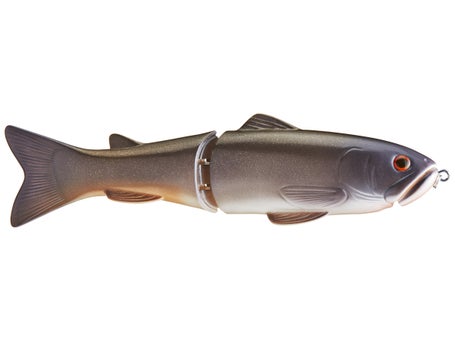
The Silent Killer wasn't the first big bait. Swimbaits had existed in various forms for decades, particularly in the American striper and saltwater markets. But the Silent Killer was the first big bait designed specifically for pressured Japanese largemouth bass -- fish that had already learned to avoid conventional swimbaits.
Okumura's key innovation was construction. Rather than building the lure from solid hard plastic or wood (the standard approach), the Silent Killer used a hard foam core covered in a soft elastomer shell. This gave the bait three critical properties:
-
Lifelike texture. When a bass struck the Silent Killer, the soft shell compressed like real flesh. Instead of the immediate hard rejection that bass often give hard plastic baits, the soft texture encouraged fish to hold the lure longer -- giving the angler an extra half-second to set the hook.
-
Subtle vibration. The soft shell dampened the harsh rattling and loud water displacement of hard-bodied swimbaits. The Silent Killer produced what Okumura called "weak wave action" -- a subtle, natural swimming vibration that mimicked a real fish rather than a plastic imitation. In clear, pressured waters like Biwa, this subtlety proved devastating.
-
Realistic visual profile. The elastomer shell allowed for extremely detailed paint finishes and 3D features that simply weren't possible on hard-bodied lures. Gill plates, scale patterns, and fin detail reached a level of realism that set a new standard in bait design.
The original Silent Killer measured 175mm (approximately 7 inches) and weighed around 60g (2.1 oz). For Japanese bass fishing in 2004, this was enormous. Most hard baits on the market topped out at 110-115mm. Okumura was asking anglers to tie on a lure nearly twice the size of anything in their tackle box.
It worked. The Silent Killer quickly became the must-have lure on Lake Biwa, and trophy catches spiked among anglers who committed to throwing it. Within two years, deps expanded the Silent Killer line to include the 250mm version (roughly 10 inches) -- a genuine giant bait that pushed the boundaries of what bass tackle could handle.
Today the Silent Killer family spans multiple sizes: the 115mm, 145mm, 175mm, and 250mm. The 175mm remains the best-selling model, and the design has been updated (the "New Silent Killer" series) with refined action and improved durability while maintaining the original soft-shell construction philosophy.
Bullshooter (2008) -- The Bluegill Revolution
If the Silent Killer proved that big bait fishing worked, the Bullshooter proved it could work in ways nobody expected.
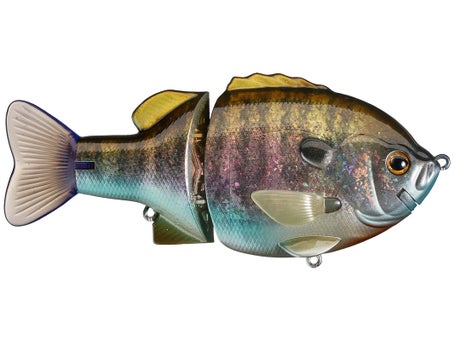
The Bullshooter is a jointed swimbait shaped like a bluegill -- not a threadfin shad, not a trout, not a generic "baitfish" shape, but a flat-sided, round-profiled sunfish. At 160mm (6.3 inches) and approximately 78g (2.75 oz), it's a substantial bait that produces a wide, rolling swimming action completely different from the tight wobble of minnow-shaped swimbaits.
Okumura designed the Bullshooter after observing that the biggest bass on Biwa often targeted bluegill over other forage species. Bluegill are slower, wider-profiled, and easier to corner than fast-moving ayu. For a trophy bass looking to maximize caloric intake with minimal effort, bluegill are the perfect prey.
The jointed body produces powerful water displacement -- what Japanese anglers call "strong appeal" -- that draws strikes from fish at significant distances. The flat sides flash in the water like a real bluegill turning, and the dual-joint construction creates an S-shaped swimming action that no single-body bait can replicate.
The Bullshooter became one of the most successful big bait designs in Japanese bass fishing history. It spawned an entire sub-category of "gill-type" swimbaits from other manufacturers, and its influence can be seen in nearly every bluegill-shaped swimbait on the market today. Multiple verified 10-pound-plus bass have been caught on the Bullshooter across Japan, including fish from Biwa, Ikehara Dam, and the Tone River system.
Slide Swimmer (2010) -- Glide Bait Perfection
The Slide Swimmer took deps into glide bait territory -- a style of big bait that moves in wide, sweeping S-curves rather than a straight-line swim. Available in 175mm, 200mm, and the massive 250mm versions, the Slide Swimmer line demonstrated deps' willingness to push size boundaries further than any other manufacturer.
The 250mm Slide Swimmer (nearly 10 inches, approximately 4.5 oz) is effectively a giant bait -- a category beyond "big bait" that requires specialized rods, reels, and line to cast and fish effectively. It's not a lure for everyone. But for anglers targeting the absolute biggest bass in a body of water, the Slide Swimmer 250 has few equals.
The gliding action triggers a different predatory response than a steady-swimming bait. The wide lateral movement imitates a wounded or disoriented baitfish -- an easy meal that trophy bass can't resist. Japanese tournament pros have reported that the Slide Swimmer consistently produces strikes from fish that ignore traditional swimbaits, particularly during cold-water periods when bass prefer slower, more deliberate prey.
Cover Scat (2019) -- The Soft Plastic Surprise
Deps isn't only about hard baits. The Cover Scat is a high-specific-gravity soft plastic stick bait that sinks horizontally with a subtle shimmy. At 3.5 and 4 inches, it's small by deps standards, but it reflects the brand's obsession with catching big fish through unconventional approaches.
The Cover Scat's dense formulation (it sinks at approximately 1 foot per second without any added weight) allows it to be fished weightless into heavy cover -- a technique that produces an extraordinarily natural presentation. The bait sinks through cover on a horizontal plane, mimicking a dying baitfish drifting through vegetation.
The Cover Scat became a phenomenon in Japanese bass fishing. It won multiple tackle awards and became one of the best-selling soft plastics in Japan. For deps, it proved that the brand's design philosophy -- build what catches big fish, regardless of convention -- applied to finesse presentations as well as giant swimbaits.
Other Notable Designs
Deps' catalog extends well beyond its marquee models:
- Deathadder: A versatile soft plastic swimbait available from 4 to 8 inches, with a thick body and powerful tail kick designed for both finesse and power presentations. The 6-inch model is one of the most popular soft swimbaits in Japan.
- Flat Back Jig: A swim jig with a flattened head design that produces a distinctive rolling action. Designed for swimming through vegetation and around cover.
- Bull Flat: A flat-sided soft plastic designed to imitate bluegill. The high-density material sinks on a glide, mimicking a stunned or dying sunfish -- deadly around bedding bass.
- Sakamata Shad: A soft jerkbait with an erratic darting action. Available in 5, 6, and 8-inch sizes, with the larger models designed specifically for trophy hunting.
- Rebound Stick: A weighted stick bait that falls in a spiraling, rolling motion. The unique fall action has made it a favorite among Japanese anglers targeting suspended bass.
The Deps Approach to Tackle Design
Source: Tackle Warehouse
Rods: The Sidewinder and Huge Custom Series
Deps doesn't just make lures -- they build the entire system around them. The Sidewinder rod series, launched at the company's founding, was designed from the ground up to fish big baits.
The Sidewinder lineup includes rods specifically matched to deps' lure categories:
- Standard Sidewinder: Heavy and extra-heavy power rods for big baits in the 1-4 oz range. Lengths range from 6'6" to 7'4".
- Huge Custom: Ultra-heavy rods designed for giant baits over 4 oz. These are specialized tools with the backbone to cast and work baits that weigh a quarter pound or more.
- Gain Element: A more versatile series that bridges the gap between standard bass rods and dedicated big bait tools.
Each rod in the lineup is designed around a specific lure weight range and action type. This isn't marketing -- it's engineering. Throwing a 4-oz swimbait on a rod designed for 1-oz lures doesn't just feel bad, it's dangerous (snapped rod tips, broken line, lost fish). Deps builds rods that specifically match the demands of their lures, creating an integrated system where everything works together.
The Power Tackle Philosophy
Deps' tackle recommendations reflect an approach that's foreign to much of Japanese bass fishing. While the broader Japanese bass scene trends toward finesse fishing with light line and small lures, deps pushes in the opposite direction:
- Line: 20-30 lb fluorocarbon or 50-80 lb braid as standard recommendations. Many deps anglers on Biwa spool up with PE (braided) line in the 6-8 class (roughly 60-80 lb test) when throwing giant baits near heavy cover.
- Reels: High-capacity baitcasting reels with strong drags. Shimano's Antares and Calcutta Conquest series are popular choices among deps anglers for their combination of casting performance and winching power.
- Terminal tackle: Heavy-duty hooks, split rings, and swivels rated for fish that could exceed 15 pounds. Nothing in the deps system is designed to fail at the critical moment.
This power-tackle approach puts deps at odds with Japan's dominant finesse culture -- and that tension is part of the brand's identity. Deps doesn't apologize for building big, heavy, expensive tackle. They build for anglers who have decided that one 10-pound bass is worth more than ten 2-pounders.
Deps' Impact on Global Bass Fishing
The American Big Bait Movement
American bass anglers didn't discover big baits in a vacuum. The trend that exploded across American bass fishing in the 2010s -- throwing 6, 8, and 10-inch swimbaits for trophy largemouth -- traces its lineage directly to Japanese innovation, and deps sits at the center of that lineage.
American swimbait culture existed before deps, primarily in the California trophy bass scene where hand-poured trout imitations had been used since the 1990s. But the systematic approach to big bait design -- creating purpose-built lures, rods, reels, and techniques as an integrated system -- came from Japan. And deps was the brand that codified that system.
By the time American anglers started regularly throwing big baits in tournaments around 2015-2018, deps had already been refining their approach for over a decade. The brand's lures were available through JDM import channels, and knowledgeable American anglers were importing deps tackle directly from Japan well before any official U.S. distribution existed.
Today, deps products are available internationally through both direct Japanese retailers and select international distributors. The brand maintains its Japan-first development approach, designing and testing all products on Japanese waters before any international release.
Influence on Other Manufacturers
Deps' success with big baits opened the door for virtually every other big bait brand on the market:
- Gan Craft: Another Japanese big bait maker that gained international recognition, particularly with the Jointed Claw series. Gan Craft and deps together defined the Japanese big bait category.
- Megabass: Expanded into larger lure sizes after deps proved the market existed. The Megabass I-Slide is a direct response to the demand deps created.
- Jackall: Released several big bait designs including the Gantia and Gantarel that target the same trophy-hunting market deps pioneered.
- American brands: Companies like Savage Gear, River2Sea, and numerous custom swimbait makers have all built products influenced by deps' design philosophy.
The bluegill-shaped swimbait category that deps created with the Bullshooter is now one of the most active design categories in bass fishing. Virtually every major manufacturer offers a gill-body swimbait, and the design principles -- jointed body, flat-sided profile, rolling action -- all trace back to deps' original 2008 design.
How to Fish Deps Lures: Techniques from Japanese Pros
The Slow Roll
The most fundamental deps technique is the slow roll -- a steady, slow retrieve that keeps the bait swimming at a constant depth. This sounds simple because it is. The genius is in the lure design, not the angler's technique.
For the Silent Killer and Slide Swimmer series, the optimal retrieve speed is painfully slow by American standards. Japanese anglers describe it as "walking speed" -- the pace you'd walk along the shoreline. The bait should be swimming, not charging. At this speed, the soft-shell construction and jointed bodies produce maximum action with minimal speed, creating a presentation that looks exactly like a real fish casually swimming through an area.
The Dead Sticking Approach
One of the most effective deps techniques on pressured waters is dead sticking -- casting the bait out, letting it sink or suspend, and simply waiting. The Cover Scat and Bull Flat are particularly effective with this approach.
The logic is counterintuitive. A motionless bait seems like it shouldn't catch anything. But in waters where bass have learned to associate moving lures with danger, a static presentation can trigger a completely different predatory response. A baitfish that isn't moving suggests vulnerability -- it's injured, stunned, or dying. For a big bass, that's an irresistible opportunity.
Japanese anglers on Biwa have documented wait times of 30 seconds to several minutes between casts when dead sticking deps soft plastics. Patience is the technique.
Targeting Specific Structure
Deps lures are designed for specific structural situations:
- Bullshooter: Swim along the edges of vegetation mats, around submerged brush, and through open lanes in lily pads. The bluegill profile triggers strikes from bass that are guarding beds or ambushing panfish.
- Silent Killer: Fish parallel to breaklines at moderate depths (6-15 feet). The subtle vibration draws bass up from deeper water to investigate.
- Slide Swimmer: Work over deep flats and along points where bass are cruising. The wide gliding action covers water efficiently while maintaining the slow speed that triggers followers into committing.
- Cover Scat/Deathadder: Skip under docks, pitch into laydowns, and work through sparse cover where a Texas rig or free rig might be too subtle to draw attention from trophy-class fish.
The Business of Being Uncompromising
 Source: Tackle Warehouse
Pricing and Scarcity
Deps lures are expensive. The Silent Killer 175 retails for approximately ¥4,500-5,500 ($30-37 USD). The Bullshooter 160 runs ¥5,000-6,000 ($33-40 USD). The Slide Swimmer 250 commands ¥7,000-8,000+ ($47-53+ USD). These prices are 2-4x higher than comparable-sized lures from larger manufacturers.
The pricing reflects both the construction quality (the soft-shell builds are labor-intensive) and deps' deliberate production strategy. Deps limits production runs, creating artificial scarcity that keeps demand high and discounting low. Popular colors and models frequently sell out within hours of release, and secondary market prices for discontinued colors can reach 2-3x retail.
This scarcity-driven model has become standard practice among premium Japanese lure makers, but deps pioneered the approach. The brand understood early that trophy-hunting anglers don't shop on price -- they shop on results. And a lure that catches 10-pound bass is worth whatever the angler is willing to pay.
Japan-Centric Development
Unlike OSP, Megabass, and Jackall, which have all established significant international distribution, deps has remained relatively Japan-focused in its business operations. The brand's products are available internationally, but development, testing, and primary marketing all center on the Japanese market -- particularly Lake Biwa.
This Japan-first approach is both a strength and a limitation. The strength is focus: every deps product is designed for the specific conditions of Japanese trophy bass fishing, with no compromises for international market preferences. The limitation is availability: outside Japan, deps products can be difficult to source and expensive to ship, which keeps the brand's international customer base relatively small compared to its Japanese dominance.
The Seasonal Playbook: When Japanese Pros Reach for Deps
Understanding when to throw big baits is as important as understanding which ones to throw. Japanese deps specialists follow a seasonal approach that differs significantly from the "big bait = cold water" assumption that dominates American thinking.
Spring (March-May): Pre-Spawn Giants
Spring is the premier big bait season in Japan, and deps lures dominate the approach. Pre-spawn female bass -- the heaviest fish in any lake -- move into staging areas in 2-4 meters of water before committing to shallow spawning flats. These fish are actively feeding to build energy reserves for the spawn, and they're targeting the largest available forage.
The Bullshooter is the weapon of choice during this window. Its bluegill profile matches the forage that pre-spawn bass target most aggressively, and its slow rolling action covers water at the deliberate pace that staging bass respond to. Japanese guides on Biwa report that the 2-3 week pre-spawn window produces more 10-pound-plus fish on the Bullshooter than any other period.
Summer (June-August): Deep Retreats and Low-Light Windows
Summer big bait fishing in Japan concentrates on two windows: the first and last 90 minutes of daylight. During these low-light periods, big bass move from deep holding areas to shallow feeding zones. The Slide Swimmer 250 excels during these transitions -- its wide, slow glide covers expansive flats efficiently during the narrow time window.
Mid-day summer fishing with deps lures shifts to the Deathadder and other soft plastics fished on deep structure. The big hard baits rest until the light drops.
Fall (September-November): The Feeding Frenzy
Fall is the second major big bait season. Bass are feeding aggressively before winter, baitfish schools are concentrated, and the competitive feeding environment makes bass less cautious about attacking large prey. The Silent Killer 175 shines during fall -- its subtle vibration matches the "wounded baitfish" trigger that fall bass key on, and the soft-shell construction encourages commitment bites from fish in feeding mode.
Winter (December-February): Patience and Precision
Winter big bait fishing exists in Japan but demands extreme patience. Retrieves slow to a crawl. The Cover Scat's dead-sticking approach becomes the primary deps technique -- cast, let it sink, and wait. The theory is simple: a big, stationary prey item in cold water is an opportunity a lethargic bass can't afford to ignore, because the caloric return justifies the minimal energy expenditure required to eat something that isn't moving.
Deps by the Numbers
- Founded: 1997 by Kazumasa Okumura
- Headquarters: Shiga Prefecture, Japan (on the shores of Lake Biwa)
- Product lines: 40+ lure models, 15+ rod models, terminal tackle
- Price range: ¥800 (soft plastics) to ¥8,000+ (giant baits)
- Best-selling lure: Deathadder (soft plastic swimbait series)
- Most iconic lure: Silent Killer 175
- Key innovation: Soft-shell hard bait construction (2004)
- Primary test waters: Lake Biwa, Ikehara Dam, Pool Dam reservoirs
- Tackle award wins: Multiple Lure Magazine T.O.Y. category wins across hard baits, soft plastics, and rods
Frequently Asked Questions
What is deps most famous for?
Deps is most famous for pioneering the modern big bait fishing category in Japan. Their Silent Killer (2004) and Bullshooter (2008) are considered landmark designs that proved oversized lures were the most effective way to target trophy-class largemouth bass. The brand's founder, Kazumasa Okumura, is one of Japan's most recognized big bass hunters and has built the entire company around the philosophy of catching the biggest fish possible.
Are deps lures worth the high price?
For anglers specifically targeting trophy bass, deps lures deliver value that justifies the premium. The soft-shell construction on models like the Silent Killer produces lifelike texture and action that hard-bodied competitors can't match. The build quality is exceptional -- hooks, split rings, and hardware are all heavy-duty spec. That said, if you're fishing for numbers rather than size, deps' premium pricing doesn't make sense. These are specialist tools for specialist anglers.
Can I buy deps lures outside of Japan?
Yes, but availability is more limited than mainstream brands. Deps products are available through JDM tackle importers, Japanese online retailers that ship internationally, and proxy shopping services like Buyee and ZenMarket. Some models are also available through international distributors and resellers. Be prepared for higher prices due to shipping costs and import markups -- a lure that costs ¥5,000 in Japan might run $50-60 USD delivered to the United States.
What rod and reel do I need to fish deps big baits?
For lures in the 2-4 oz range (Silent Killer 175, Bullshooter 160), you need a heavy to extra-heavy power baitcasting rod in the 7'0"-7'6" range, paired with a baitcasting reel that holds at least 100 yards of 20 lb fluorocarbon. For giant baits like the Slide Swimmer 250 (4+ oz), step up to a dedicated swimbait rod with extra-heavy power and a high-capacity reel with a strong drag system. Deps' own Sidewinder and Huge Custom rod series are designed specifically for these applications.
How does deps compare to other Japanese big bait brands like Gan Craft?
Deps and Gan Craft are the two pillars of Japanese big bait fishing, but their approaches differ. Deps focuses on realistic soft-shell construction and naturalistic swimming action, while Gan Craft (particularly the Jointed Claw series) leans toward harder-bodied designs with more aggressive, erratic action. Many serious big bait anglers fish both brands, using deps for slow, natural presentations and Gan Craft for more reactive, triggering approaches. Both produce excellent results on trophy bass.
Related Reading
- Best JDM Lures That Changed Bass Fishing -- where deps lures rank among the most influential Japanese designs ever made
- OSP vs Megabass vs Jackall: Comparing Japan's Top Lure Makers -- how deps' approach differs from Japan's other major manufacturers
- Lake Biwa: Japan's Biggest Bass Lake and the Techniques It Created -- the waters that shaped deps' entire design philosophy
— The JDM Tackle Lab Team