O.S.P. vs. Megabass vs. Jackall: Japan's Big Three Lure Makers Compared
If you spend enough time in the Japanese bass fishing world, three names come up more than any others. Not Daiwa. Not Shimano. Those are tackle conglomerates -- they make everything from reels to bicycles. The Big Three of Japanese bass lure design are specialists. They eat, sleep, and breathe bass fishing. And they've shaped how millions of anglers approach the sport.
Quick Answer
- O.S.P., Megabass, and Jackall are the three most influential bass lure manufacturers in Japan, each with a distinct design philosophy shaped by its founder's competitive fishing background.
- Megabass (founded 1986) pioneered industrial design in fishing with 23 Good Design Awards; O.S.P. (founded 2000) built its reputation on the "10 Years Standard" philosophy of long-lasting performance; Jackall (founded 1999) leveraged its Lake Biwa headquarters to become Japan's most prolific product developer.
- All three export to the U.S. market, but their Japan-only (JDM) product lines include 40-60% more color patterns and model variants than what's available domestically in America.
- Choosing between them isn't about which is "best" -- it's about matching your fishing style to the design philosophy that fits your water.
If you spend enough time in the Japanese bass fishing world, three names come up more than any others. Not Daiwa. Not Shimano. Those are tackle conglomerates -- they make everything from reels to bicycles. The Big Three of Japanese bass lure design are specialists. They eat, sleep, and breathe bass fishing. And they've shaped how millions of anglers approach the sport.
O.S.P. Megabass. Jackall.
Each was founded by a competitive angler who got tired of fishing with other people's lures. Each took a different path to becoming a powerhouse. And each produces lures with a personality so distinct that experienced JDM anglers can often identify the manufacturer without looking at the packaging.
This comparison breaks down the history, philosophy, product strengths, and best use cases for all three -- so you can figure out which brand (or combination of brands) belongs in your tackle box.
The Founders: Three Very Different Paths to the Same Industry
Source: Tackle Warehouse
Yuki Ito and Megabass -- The Designer
Megabass is the oldest of the Big Three, founded in 1986 in Hamamatsu, Shizuoka Prefecture. Its founder, Yuki Ito, grew up in a fishing lodge on Lake Hamana, where he received what he calls "an apprenticeship in fish catching" from local commercial fishermen. By elementary school, he was hand-carving his own lures because imported American baits were too expensive for a kid's budget.
That DIY origin story matters. Ito didn't come from tournament fishing -- he came from design. He studied industrial design and brought an aesthetic sensibility to lure making that the industry had never seen. The result is a company where lures are treated as precision instruments, not disposable fishing accessories.
Megabass has won 23 Good Design Awards from Japan's Institute of Design Promotion -- a feat unmatched by any other fishing tackle company. The POPX and LIVE-X Leviathan earned the first awards in 1997, and Ito has continued winning them for over 25 years straight, including the prestigious iF Design Award for four consecutive years and the Red Dot Design Award in 2022 -- a first for any fishing rod in history.
The company operates from Hamamatsu with in-house hand-tuners who individually adjust each lure's lip angle, weight position, and swim action before it ships. That's not marketing fluff. It's why a Megabass Vision 110 out of the box swims identically to every other Vision 110 -- something most lure manufacturers can't guarantee.
Seiji Kato and Jackall -- The Competitor
Jackall was founded in January 1999 by Seiji Kato and Toshio Ono, both former employees of Daiwa (now Globeride). The founding story is pure competitor mentality: two tournament anglers who got frustrated with corporate product development timelines and wanted to make lures that matched what they actually needed on the water.
They set up shop in Otsu, Shiga Prefecture -- right on the shores of Lake Biwa, Japan's largest lake and the undisputed mecca of Japanese bass fishing. That location wasn't accidental. Kato and Ono insisted on being within casting distance of their primary test waters. Every Jackall prototype gets field-tested on Biwa before it goes to market.
In 2010, Jackall signed a landmark business alliance with Shimano, the world's largest fishing tackle manufacturer. The partnership gave Jackall access to Shimano's manufacturing infrastructure and global distribution network while preserving Jackall's independent product development. It was a pivotal moment that transformed Jackall from a boutique lure maker into one of Japan's highest-volume bass tackle brands.
Jackall's product catalog is enormous. While O.S.P. might release 2-3 new products per year and Megabass 4-5, Jackall regularly launches 8-12 new lures annually across bass, saltwater, and trout categories. That volume reflects the founders' tournament mindset: they want a solution for every situation, not a few perfect tools.
Toshinari Namiki and O.S.P. -- The Purist
O.S.P. (Over Stimulation Products) was founded in 2000 by Toshinari Namiki, one of the most decorated professional bass anglers in Japanese history. Namiki had just returned from competing on the B.A.S.S. circuit in the United States -- one of the first Japanese anglers to compete seriously in American professional bass fishing.
The founding wasn't driven by empire-building. As Namiki has explained in interviews, he started O.S.P. because he wanted better lures for his own tournament fishing and needed a way to fund his competitive career. That practical origin shows in every product the company makes.
O.S.P.'s guiding principle is "10 Years Standard" -- the idea that every lure should remain in an angler's first-string tackle box for at least a decade. Some products take up to five years of prototyping before release. The result is a compact product line where nearly every item is a proven performer, not a speculative launch.
Based in Hachioji, Tokyo, O.S.P. maintains a deliberately small organizational footprint. Namiki remains directly involved in product development, personally testing every prototype across multiple seasons and conditions before approving production. The company's field staff -- all active tournament competitors -- contribute real-world testing data throughout the development cycle.
Design Philosophy: How Each Brand Approaches Lure Making
Understanding the philosophical differences between these three companies is the key to choosing between them. They make similar product categories but approach the design process from fundamentally different starting points.
Megabass: Art Meets Engineering
Megabass treats lure design as industrial art. Every product begins with Yuki Ito's hand-drawn sketches -- not CAD models -- and the aesthetic qualities of a lure receive as much attention as its hydrodynamic performance. The company's design language is immediately recognizable: organic curves, realistic finishes with up to 12 paint layers, and a visual refinement that makes Megabass lures look expensive even before you see the price tag.
The engineering underneath is equally meticulous. Megabass pioneered multiple technologies that are now industry standard:
- Multi-Way Moving Balancer System: Tungsten weight transfer for casting distance and swim stability
- LBO (Linear Bearing Oscillator): A magnetic bearing system that eliminates friction during weight transfer, enabling longer casts with lighter lures
- Biotope Design: Color patterns based on actual spectral analysis of live baitfish, not artist interpretation
Megabass produces approximately 300+ SKUs across bass, saltwater, and trout categories, with many models available in 30-50+ color variations in the Japanese domestic market.
Best for: Clear-water finesse situations, jerkbait fishing, sight fishing, and any scenario where lure aesthetics and swim precision matter most. If you fish pressured, clear-water impoundments, Megabass lures tend to outperform.
Jackall: Speed to Market, Breadth of Solutions
Jackall's design philosophy mirrors tournament fishing itself: adapt fast, cover water, have an answer for everything. The company's R&D cycle is the fastest of the Big Three, with new products moving from concept to retail in as little as 8-12 months.
That speed comes from the Lake Biwa advantage. Jackall's headquarters sits on one of the most diverse bass fisheries in the world -- a lake with shallow weed flats, deep rocky structure, river current areas, and everything in between. Any lure concept can be tested across multiple habitat types without leaving the backyard.
Key Jackall innovations include:
- TN Series Vibration Lures: The Jackall TN60 and TN70 essentially created the modern Japanese vibration (lipless crankbait) category, with a tight, high-frequency action that outperformed traditional lipless cranks in cold water
- Soul Shad Platform: The thin-profiled shad crankbait that blurred the line between crankbaits and jerkbaits, spawning an entirely new lure category in Japan
- Flick Shake Series: Soft plastic innovations that helped establish the Neko rig as a mainstream technique worldwide
Jackall's catalog exceeds 400 individual products, making it the most diverse of the Big Three. The company also moves aggressively into non-bass categories, including saltwater, trout, and panfish -- a diversification strategy the other two have been slower to pursue.
Best for: Versatile anglers who fish diverse conditions, tournament competitors who need a lure for every situation, and anglers who fish Lake Biwa-style mixed structure environments. Jackall excels at "covering water" products -- search baits, vibration lures, and versatile cranks.
O.S.P.: Fewer Products, Maximum Performance
O.S.P.'s philosophy is the inverse of Jackall's. Instead of a broad catalog, Namiki builds a curated arsenal where every product is a specialist tool refined to near-perfection.
The "10 Years Standard" isn't just marketing. The OSP Blitz crankbait, released in 2004, remains the most recommended shallow crankbait on Japanese fishing forums over two decades later. The High Pitcher spinnerbait, released around the same time period, is still a top-10 finisher in Lure Magazine's annual reader polls. Products don't get discontinued because they don't age out -- they keep catching fish.
O.S.P.'s design innovations tend to be subtle but meaningful:
- High-Pitch Action: A tight, rapid wobble with minimal lateral displacement, designed to trigger strikes without spooking wary fish
- Dual-Purpose Engineering: Many O.S.P. lures are designed to excel at two techniques, not just one (the DoLive Shad works as both a swimbait and a glide bait, for instance)
- Pro-Grade Durability: O.S.P. lures are designed to survive tournament-level abuse, with reinforced lips, premium hooks (Owner or Gamakatsu), and impact-resistant finishes
The complete O.S.P. product line includes roughly 80-100 SKUs -- a fraction of Megabass or Jackall. But each item has been tested across hundreds of tournament hours before release.
Best for: Anglers who want proven, reliable tools that they can master over years of use. O.S.P. excels in pressured water finesse situations, shallow cranking, and spinnerbait fishing. If you'd rather perfect five lures than experiment with fifty, O.S.P. is your brand.
Head-to-Head: Key Product Categories Compared
 Source: Tackle Warehouse
Jerkbaits
| Feature | Megabass Vision 110 | Jackall Rerange 110 | O.S.P. Varuna 110 |
|---|---|---|---|
| Weight | 14.2g | 14.8g | 14.5g |
| Depth | 4-6 ft | 4-6 ft | 4-6 ft |
| Action | Tight dart, horizontal suspend | Wide dart, nose-down suspend | Medium dart, horizontal suspend |
| Color options (JDM) | 50+ | 25+ | 15+ |
| Best condition | Cold/clear water | Stained/moderate wind | All-around |
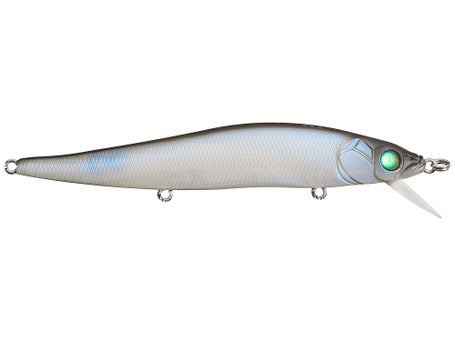
The Vision 110 is still the gold standard. It created the category, and nothing has truly dethroned it for cold-water, post-frontal jerkbait fishing. But the Jackall Rerange offers a wider, flashier dart that can outperform in stained water, and the Varuna provides O.S.P.'s signature reliability at a slightly lower price point.
Crankbaits (Shallow)
| Feature | Megabass SR-X Griffon | Jackall Aska 50SR | O.S.P. Blitz |
|---|---|---|---|
| Weight | 10.6g | 7.5g | 9g |
| Depth | 3-5 ft | 3-4 ft | 3-6 ft |
| Action | Wide wobble | Medium wobble, tight at speed | Tight high-pitch |
| Deflection | Moderate | Good | Excellent |
| Best condition | Open water, aggressive fish | Mixed cover | Heavy cover, pressured fish |
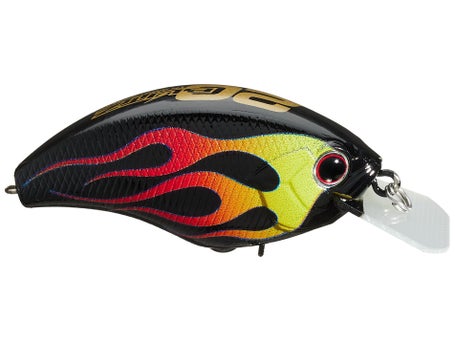
The Blitz wins on versatility. Its tight action at slow speeds makes it effective in conditions where most crankbaits fail, and its deflection off wood and rock is best-in-class. The SR-X Griffon brings Megabass's visual refinement and a wider wobble that calls fish from distance. The Aska is Jackall's workhorse -- reliable, well-priced, and effective across most conditions.
Soft Plastics
This is where the comparison gets interesting, because each brand takes a radically different approach:
- Megabass soft plastics emphasize realism. Products like the TK Twister and Bottle Shrimp feature highly detailed anatomical molding and multi-layer color injections. They look like real baitfish or crawfish even out of the water.
- Jackall focuses on versatility and signature features. The Flick Shake's ribbed body and offset center of gravity produce the action that made the Neko rig famous worldwide.
- O.S.P. builds multi-function designs. The DoLive Stick, DoLive Shad, and DoLive Craw are all engineered to work across multiple rig types and techniques, reducing the number of individual soft plastic baits an angler needs to carry.
Price Comparison: What You'll Actually Pay
Pricing varies between the Japanese domestic market and U.S. retail. Here's a general range for popular models:
| Category | Megabass (JDM/US) | Jackall (JDM/US) | O.S.P. (JDM/US) |
|---|---|---|---|
| Jerkbait | ¥1,800-2,200 / $16-20 | ¥1,500-1,800 / $13-17 | ¥1,600-1,900 / $14-18 |
| Crankbait | ¥1,500-2,000 / $14-18 | ¥1,200-1,600 / $11-15 | ¥1,400-1,800 / $13-17 |
| Spinnerbait | ¥1,200-1,600 / $11-15 | ¥1,000-1,400 / $9-13 | ¥1,100-1,500 / $10-14 |
| Soft plastic (pack) | ¥700-1,000 / $7-10 | ¥600-900 / $6-9 | ¥650-950 / $6-9 |
Megabass commands the highest premiums, reflecting its design-forward positioning and hand-tuning process. Jackall tends to be the most accessible price point, especially through its Shimano partnership distribution. O.S.P. sits in the middle -- premium quality without the Megabass design premium.
Import vs. domestic pricing note: JDM-exclusive colors and models typically cost 20-40% less when purchased directly from Japanese retailers and shipped internationally. See our guide to buying JDM lures for sourcing tips.
Which Brand Wins in Different Scenarios?
 Source: Tackle Warehouse
Tournament Fishing on Pressured Water
Winner: O.S.P. The "10 Years Standard" philosophy means every O.S.P. lure has been tournament-tested extensively before release. Namiki's background as a B.A.S.S. competitor means these products are built for the hardest-fished waters. The Blitz, High Pitcher, and DoLive series are all tournament-proven and reliable under pressure.
Clear Water, Sight Fishing, Finesse
Winner: Megabass. The Vision 110, POPX, and Spinbait series excel in clear water where fish can see the lure in detail. Megabass's paint finishes and realistic profiles give them an edge when bass are being selective. The company's spybait designs are particularly dominant in clear-water, deep-sighting scenarios.
Diverse Fishery, Need Everything
Winner: Jackall. If you fish a lake that has grass flats, rocky points, timber, and open water all in the same day, Jackall's massive catalog means you can build an entire tackle box from one brand. The TN vibration series, Soul Shad, Flick Shake, and Break Blade cover almost every situation you'll encounter.
Learning JDM Techniques
Winner: Tie (O.S.P. + Jackall). O.S.P.'s lures are the most forgiving -- the Blitz catches fish even with imperfect retrieve speed, and the DoLive Stick practically fishes itself on a weightless rig. Jackall's broad catalog means you can experiment with multiple Japanese techniques without switching brands. Both brands have extensive Japanese-language instructional content on YouTube.
Building a Budget JDM Collection
Winner: Jackall. The lowest average price point, the widest availability in the U.S. (thanks to the Shimano distribution deal), and the most models to choose from. A complete Jackall setup covering crankbaits, jerkbaits, vibration lures, and soft plastics can be assembled for under $100.
The Bigger Picture: Why All Three Matter
Here's the thing about the Big Three that most comparisons miss: they don't just compete with each other -- they push each other forward. When Megabass raised the bar on lure aesthetics with the Vision 110, Jackall and O.S.P. had to respond with better finishes and more precise actions. When O.S.P. proved that a slow-speed crankbait could dominate the T.O.Y. awards for years, Megabass and Jackall started developing their own high-pitch action cranks. When Jackall's TN Series showed that vibration lures could be finesse tools, the other two followed.
This competitive dynamic is what makes JDM lures so good. Japan has roughly 3 million active bass anglers fishing lakes and reservoirs that are small by American standards. The fishing pressure is intense. The fish are educated. And the lure makers who survive in that market produce tools that are tested against the hardest conditions the sport offers.
O.S.P., Megabass, and Jackall aren't just three brands. They're the engine of Japanese bass fishing innovation.
How to Try Each Brand: Starter Kits
If you want to experience each brand's philosophy without committing to a full lineup, here's what to buy first:
Megabass Starter Kit (~$50)
- Vision 110 -- The flagship jerkbait. Fish it on 8lb fluorocarbon with a medium-action rod.
- POPX -- The topwater that won Good Design Awards. Perfect for early morning surface action.
Jackall Starter Kit (~$40)
- TN60 -- The vibration lure that changed the category. Versatile from spring through fall.
- Flick Shake 4.8" -- The soft plastic that makes Neko rigging easy. Pair with a 1/16oz nail weight.
O.S.P. Starter Kit (~$45)
- Blitz -- The shallow crankbait standard. Fish it slow in cold water, fast in warm water.
- DoLive Stick 4.5" -- Weightless, skip it under docks. The action on the fall is irresistible.
Use our Lure Selector Tool to match specific Big Three products to your water conditions and target depths.
Frequently Asked Questions
Which of the Big Three makes the best jerkbait?
Megabass, and it's not particularly close. The Vision 110 created the modern suspending jerkbait category and has been the benchmark for over two decades. It's appeared in the top 10 hard baits in Lure Magazine's T.O.Y. awards more than a dozen times. That said, O.S.P.'s Varuna and Jackall's Rerange are both excellent -- the Vision 110 just has a track record that's hard to argue with.
Are O.S.P. lures worth the higher price compared to Jackall?
It depends on how you fish. If you tend to find a few lures and master them over years, O.S.P.'s "10 Years Standard" approach means you're paying for longevity of relevance -- not just build quality. The OSP Blitz has been a top-tier crankbait since 2004. That's over 20 years of consistent performance. If you prefer to experiment and rotate through lures seasonally, Jackall's lower price point and broader catalog offer more flexibility per dollar.
Can I build a complete bass tackle setup from just one of these brands?
Jackall is the closest to a one-brand solution thanks to its partnership with Shimano for rods and reels and its massive lure catalog. Megabass also produces rods, reels, and accessories alongside lures. O.S.P. is lure-focused and doesn't manufacture rods or reels, so you'd need to pair O.S.P. lures with tackle from another brand.
How do I know if a JDM lure from these brands is authentic?
Buy from authorized dealers or directly from Japanese retailers like Tackle Warehouse Japan or Japan Lure Shop. Counterfeit Megabass and Jackall lures are common on Amazon and eBay -- fakes often have blurry printing, inferior hook quality, and inconsistent swim action. Authentic JDM products will have Japanese-language packaging with lot numbers and barcodes traceable to the manufacturer.
Which brand is best for American-style power fishing?
Jackall. Its product line includes aggressive search baits like the Break Blade chatterbait, TN vibration series, and Deraball spinnerbait that match the fast-and-loud approach common in American tournament fishing. Megabass and O.S.P. lean more toward finesse and precision -- they catch plenty of fish on power techniques, but that's not where their design DNA originated.
Related Reading
- The 10 Best JDM Lures That Changed Bass Fishing
- Spybaiting: The Japanese Bass Technique America Just Discovered
- Japanese Finesse Fishing: Why Japan's Pressured Waters Breed Better Techniques
-- The JDM Tackle Lab Team