Lake Biwa Bass Fishing: Home of the 22-lb World Record
Every sport has a place that matters more than others. For tennis, it's Wimbledon. For surfing, it's Pipeline. For bass fishing, it's Lake Biwa.

Quick Answer
- Lake Biwa (琵琶湖) is Japan's largest lake at 670 km², holds the tied world record for largemouth bass at 10.12 kg (22.31 lbs) caught by Manabu Kurita in 2009, and is the birthplace of more modern bass fishing techniques than any other single body of water on Earth.
- The lake's unique combination of extreme fishing pressure (thousands of anglers daily), diverse structure (shallow weed flats in the south, deep rocky basins in the north), and world-class bass genetics created a laboratory where only the most refined techniques survive.
- Techniques born or perfected on Biwa include mid-strolling, the Free Rig, big bait swimbait fishing, Neko rigging, and an entire philosophy of "horizontal" presentation fishing that has reshaped Japanese bass fishing over the past decade.
- Major Japanese lure companies -- including Jackall, Deps, and numerous boutique brands -- are headquartered on Biwa's shores, using the lake as their primary product development testing ground.
Every sport has a place that matters more than others. For tennis, it's Wimbledon. For surfing, it's Pipeline. For bass fishing, it's Lake Biwa.
Not Lake Fork. Not Sam Rayburn. Not Guntersville. Those are great fisheries that produce big fish. But Lake Biwa doesn't just produce big fish -- it produces the ideas that change how the entire sport is practiced. The techniques that Japanese pros develop on Biwa's waters travel outward in concentric circles: first to other Japanese lakes, then to the JDM tackle industry, then to American import enthusiasts, and eventually into the mainstream of global bass fishing.
The world record largemouth bass came from this lake. The companies that make the lures you fish came from this lake. And the techniques you'll be using five years from now? There's a good chance they're being tested on Biwa right now.
The Lake: Geography and Character
Photo by DeltaWorks on Pixabay
Basic Numbers
Lake Biwa sits in Shiga Prefecture, roughly 10 kilometers northeast of Kyoto in central Japan. It's the country's largest lake by every metric that matters:
- Surface area: 670.33 km² (258.8 sq mi) -- roughly the size of the city of Chicago
- Maximum depth: 103.58 m (339.8 ft) in the north basin
- Average depth: 41.2 m (135.2 ft) overall
- Age: Approximately 4 million years -- one of the oldest lakes in the world
- Species: Over 1,000 documented plant and animal species, including 60+ endemic species found nowhere else on Earth
South Lake vs. North Lake
The Biwako Ohashi Bridge divides the lake into two fundamentally different fishing environments:
South Lake (南湖 -- Nanko)
- Area: Approximately 58 km² (roughly 1/11 of total lake area)
- Average depth: 4 meters (13 feet)
- Character: Shallow, weed-dominated flats with fertile bottom composition
- Bass population: High density, moderate average size, extreme fishing pressure
- Key structure: Submerged weed beds (primarily Egeria densa and Hydrilla), man-made riprap, marina docks, channel edges
- Season: Productive year-round, peak March through November
The South Lake is where most anglers fish and where most techniques are born. Its shallow, weed-rich environment creates ideal bass habitat at massive scale. During peak weed growth (June-October), the entire South Lake bottom can be covered in vegetation at depths of 1-4 meters.
North Lake (北湖 -- Hokko)
- Area: Approximately 612 km² (11 times the South Lake)
- Average depth: 43 meters (141 feet)
- Character: Deep, rocky, oligotrophic (low nutrient), reminiscent of the Great Lakes
- Bass population: Lower density, higher average size, less fishing pressure
- Key structure: Rocky points, deep ledges, river mouths, scattered weed growth along the shallow shelves
- Season: Best March through June, October through December
The North Lake is where the trophies live. The 10.12 kg world record came from the South Lake near the Biwako Ohashi Bridge, but the North Lake consistently produces the highest average size per fish caught. The deep water, cold temperatures, and abundant natural forage (including ayu, wakasagi, and juvenile bass) create conditions for bass to reach maximum genetic potential.
The World Record: How Biwa Produced the Biggest Bass
On July 2, 2009, Manabu Kurita -- an angler from Kasugai City, Aichi Prefecture -- caught a largemouth bass weighing 10.12 kg (22 pounds, 4.97 ounces) from the South Lake near the Biwako Ohashi Bridge. The fish measured 73.5 cm in length.
The previous world record had stood since 1932 -- George Perry's 10.09 kg (22 pounds, 4 ounces) bass from Montgomery Lake, Georgia. Kurita's fish exceeded Perry's by just 30 grams, which fell within the IGFA's 2-ounce margin for a new record. The IGFA ultimately certified Kurita's fish as a tied world record, not a new record, because the margin was less than 2 ounces.
The bait? A live bluegill, approximately 25 cm long.
The record fish highlighted something Japanese anglers already knew: Lake Biwa's genetics and forage base can produce bass of truly world-class proportions. The lake's population of bluegill and other panfish provides a high-calorie forage base that supports rapid growth, and the relatively mild climate (compared to northern Japan) allows a longer growing season than most Japanese waters.
Why Biwa Grows Monster Bass
Several factors combine to make Lake Biwa uniquely productive for trophy largemouth:
- Forage diversity: Bluegill, wakasagi (Japanese pond smelt), ayu (sweetfish), gobies, juvenile bass, and crawfish provide year-round feeding opportunities across multiple prey types
- Thermal refugia: The deep North Lake provides cold-water refuge during summer, allowing bass to remain active when shallow fish in other lakes become stressed
- Weed habitat: The South Lake's extensive weed growth creates nearly unlimited ambush cover and nursery habitat for juvenile bass
- Genetic isolation: Japan's largemouth bass population was established from a small number of introductions in the 1920s, and Lake Biwa's population has been largely self-sustaining since the 1970s, potentially concentrating favorable growth genetics
- Catch and release culture: Japanese bass anglers overwhelmingly practice catch and release, allowing fish to reach maximum size potential. Despite periodic government efforts to reduce the bass population (Biwa bass are technically an invasive species), the catch-and-release ethic among sport anglers has helped maintain a robust trophy fishery
Techniques Born on Biwa
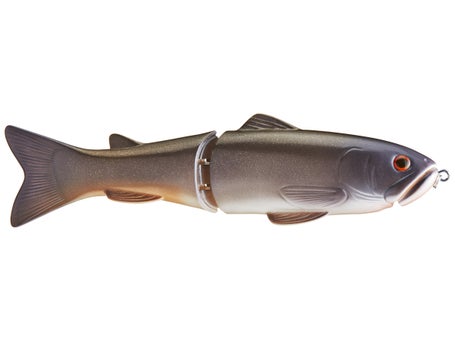 Source: Tackle Warehouse
1. Mid-Strolling (ミドスト)
Mid-strolling is perhaps the most significant technique to emerge from Lake Biwa in the last 15 years. It involves swimming a soft plastic jighead through the water column at a specific depth, using a rhythmic shaking rod-tip action to produce a rolling, darting motion that imitates a wounded baitfish.
The technique was developed by Biwa guides who needed to target bass suspended over deep weed beds in the South Lake. During summer and fall, bass on Biwa often hold 2-3 meters below the surface over weed tops that grow to within 1-2 meters of the surface. Traditional bottom-contact presentations (Texas Rig, jig) couldn't reach these fish without snagging weeds, and topwater approaches passed over them too quickly.
Mid-strolling solved the problem by keeping the bait in the mid-water column -- above the weeds but below the surface -- for extended periods. The technique requires a specific rod action (soft, parabolic), light jigheads (1/16 to 1/8 oz), and a finesse-class spinning setup.
Today, mid-strolling is practiced nationwide in Japan and is gaining rapid adoption in American tournament fishing, where it's proven particularly effective on highland reservoirs with suspended bass.
2. Big Bait Fishing (ビッグベイトフィッシング)
Lake Biwa didn't invent swimbait fishing, but it perfected the Japanese approach to big bait presentations. Companies like Deps (headquartered in Otsu, on Biwa's shores), Gan Craft, and Roman Made developed oversized jointed swimbaits, glide baits, and soft body swimbaits specifically for Biwa's trophy-class bass.
The Deps Slide Swimmer 250 -- a 250mm (10-inch) soft-body swimbait -- became iconic on Biwa for targeting 50cm+ bass around the lake's deep weed edges. The bait's ultra-slow sinking action and realistic swimming motion triggered strikes from bass that had ignored every conventional presentation.
Japanese big bait philosophy differs from American swimbait fishing in a critical way: it's not just about matching big prey to big bass. Japanese big bait anglers use oversized lures as a selectivity tool -- deliberately targeting only the largest, most aggressive bass in a population by presenting a bait that smaller fish won't attempt to eat. This approach was born from Biwa's density of 30-40cm bass that interfere with trophy-hunting strategies.
3. The Neko Rig (ネコリグ)
While the Neko Rig wasn't exclusively a Biwa invention, the lake's pressured weed flats were where the technique was refined into the precision tool it is today. The name "Neko" is commonly attributed to a shortening of the Japanese phrase "根こそぎ" (nekosogi), meaning "complete" or "thorough" -- as in, it catches everything.
Biwa guides developed specific Neko Rig approaches for working weed edges -- casting the rig into openings in the weed canopy and allowing the weighted nose to pull the worm vertically through small gaps that other presentations couldn't penetrate. The technique's ability to probe dense cover with a finesse presentation made it the go-to method for pressured Biwa bass holding tight in weed structure.
4. The Free Rig (フリーリグ)
Though the Free Rig originated in Korean tournament fishing, Lake Biwa is where it was adopted, refined, and pushed into mainstream Japanese use. Biwa's combination of hard bottom areas (particularly in the North Lake) and extreme fishing pressure created ideal conditions for the Free Rig's core advantage: presenting a soft plastic in a natural freefall state on pressured water.
Biwa guides like Naoya Hiramura incorporated the Free Rig into their guide rotations in the late 2010s and documented significant improvement over Texas Rig catch rates on days with heavy fishing pressure -- particularly on the South Lake's crowded weekend fishery.
5. Horizontal Fishing Philosophy (ヨコの釣り)
The most profound Biwa influence isn't a single technique -- it's a philosophical shift in how Japanese anglers approach bass fishing. The concept is called "横の釣り" (yoko no tsuri, or "horizontal fishing"), and it's reshaping the entire Japanese approach to lure selection and presentation.
Historically, Biwa bass feeding was heavily focused on bluegill. Anglers targeted bass around weed beds with vertical presentations -- Texas Rigs, jigs, and drop shots worked up and down through the water column, imitating bluegill feeding in weed structure. The approach was inherently vertical: cast, let it sink, work it up, let it sink again.
But over the past decade, Biwa's forage composition has shifted. Wakasagi (pond smelt) and juvenile bass have become increasingly important prey species. Unlike bluegill, which hold tight to structure, wakasagi and small bass move horizontally through open water. Targeting bass that are keyed on these horizontal-moving prey requires different presentations.
The result is a broad shift toward:
- Spinnerbaits and chatterbaits retrieved along weed edges rather than through them
- Crankbaits fished parallel to structure rather than cast into it
- Swimbaits covering water at consistent depths
- Mid-strolling presentations that move horizontally through the water column
This "vertical to horizontal" shift -- documented by Biwa guides and published in Japanese fishing media like Lure Magazine and Basser Magazine -- is now influencing technique selection on lakes throughout Japan. It's a reminder that fishing techniques evolve in response to ecosystem changes, not just angler innovation.
The Industry Around the Lake
Lake Biwa isn't just a fishery -- it's an industrial cluster for bass tackle development. The concentration of fishing companies on Biwa's shores is unmatched anywhere in the world.
Companies Headquartered on or Near Lake Biwa
- Jackall (Otsu, Shiga) -- One of Japan's Big Three lure makers, founded on Biwa's shores in 1999. Uses the lake as its primary testing ground for all bass products.
- Deps (Otsu, Shiga) -- The pioneer of Japanese big bait fishing. Products like the Slide Swimmer, Cover Scat, and Bullflat were developed specifically for Biwa's trophy bass.
- Gan Craft (Near Lake Biwa) -- Known for the Jointed Claw series of glide baits, designed for Biwa's big bass.
- Bottomup (Shiga) -- Founded by Noritaka Kawamura, known for the Beeble spinnerbait and other innovative designs.
- Issei (Shiga) -- Founded by Ryuji Murakoshi, known for the Sea Flash and innovative bait designs. The company is headquartered "at the base of Lake Biwa" (琵琶湖湖畔).
- Evergreen International (Shiga) -- Makes the Jack Hammer chatterbait that has dominated both Japanese and American tournament circuits.
This geographic clustering matters. When Deps wants to test a new swimbait, they walk outside and fish it. When Jackall needs to know if a prototype crankbait deflects off Biwa's typical weed species, they drive five minutes. The feedback loop between product development and field testing is measured in hours, not weeks.
The proximity also creates intense competitive pressure among manufacturers. A mediocre product tested on Biwa will be exposed immediately -- every guide, every field tester, and every serious amateur on the lake will have an opinion within weeks of release. This filtering process helps explain why JDM products that survive the Biwa test tend to perform well globally.
The Guide Industry
Lake Biwa has more registered bass fishing guide services than any other lake in Japan. Estimates range from 80 to 100+ active guides operating on the lake, with the highest concentration on the South Lake out of marinas in Otsu, Moriyama, and Kusatsu.
These guides serve a dual function: they're fishing educators for visiting anglers, and they're field testers for the tackle industry. Most serious Biwa guides have relationships with multiple tackle companies, testing pre-production prototypes and providing feedback that shapes final product designs.
Guide services on Biwa typically run ¥30,000-50,000 ($200-350 USD) for a full-day guided trip including boat, tackle, and instruction. The high demand and year-round season make Lake Biwa guiding one of the most viable professional fishing careers in Japan.
How to Fish Lake Biwa: Seasonal Patterns
 Photo by Kanenori on Pixabay
Spring (March-May): Pre-Spawn to Spawn
South Lake: Bass move from deep wintering areas (channel edges, deep weed remnants) into shallow weed flats for spawning. Spinnerbaits, jerkbaits, and swimbaits fished along transitional depth changes (2-4m to 1-2m) produce pre-spawn fish. During the spawn, sight fishing with soft plastics on bedding areas is the primary approach.
North Lake: Bass stage on rocky points and deep ledges (5-10m) before moving shallow. Jerkbaits like the Megabass Vision 110 and O.S.P. Varuna fished over rock transitions are the standard approach.
Key technique: Spybaiting over deep staging areas in the North Lake.
Summer (June-August): Weed Season
South Lake: Weed growth reaches maximum density, covering the entire bottom at 1-4m depth. Bass hold in and around weed structure. Topwater (frog, buzzbait) over weed mats in early morning and evening. Mid-strolling over weed tops during midday. Texas Rig and Free Rig for probing weed edges and openings.
North Lake: Bass relate to deep rock structure and thermal breaks. Deep cranking (3-5m), football jig, and drop shot on rock ledges.
Key technique: Mid-strolling with 1/16oz jighead and 3-4" shad-tail swimbait over South Lake weed tops.
Fall (September-November): The Horizontal Period
South Lake: Weed begins dying back, bass transition from weed-holding to open-water cruising. This is when the "horizontal fishing" philosophy dominates. Chatterbaits, spinnerbaits, and swimbaits fished along weed edges. Crankbaits covering water at 2-4m depth.
North Lake: Bass follow baitfish (particularly wakasagi and ayu) toward river mouths and tributary inflows. Swimbait fishing along shoreline breaks. Jerkbait fishing on deep rocky points.
Key technique: Jackall TN60 vibration lure fished on a fast retrieve along dying weed edges in the South Lake.
Winter (December-February): Deep and Slow
South Lake: Bass move to the deepest available structure -- channel edges, deep weed remnants, bridge pilings. Drop shot with small worms (3-4"), Neko Rig with light nail weight, and small jerkbaits on slow, subtle retrieves.
North Lake: Bass hold on deep rock structure (8-15m). Metal vibration lures, deep spoons, and ultra-light football jig presentations. Fishing pressure drops dramatically, and the North Lake produces its highest-quality catches of the year for anglers willing to brave cold conditions.
Key technique: Drop shot with 3" Keitech shad-tail on rocky bottom in 5-8m, South Lake channels.
The Biwa Effect: How One Lake Shapes Global Fishing
Lake Biwa's influence on global bass fishing is hard to overstate. Consider the chain reaction:
- Biwa's conditions (extreme pressure, diverse structure, trophy genetics) create demand for solutions that standard techniques can't provide
- Manufacturers and guides on Biwa develop new techniques and products to meet that demand
- Products are refined through Biwa's intense testing cycle -- guides, tournament anglers, and field testers provide rapid feedback
- Successful products enter the Japanese domestic market, backed by Biwa-proven performance claims
- Products that succeed nationally enter the U.S. export market, where they're often adopted first by JDM enthusiasts, then by mainstream anglers
- American tackle companies study and adapt JDM innovations, incorporating Japanese concepts into domestic products
This pipeline has delivered mid-strolling, spybaiting, the Free Rig, big bait philosophy, the Neko Rig, and dozens of specific lure designs to the global fishing community. The pipeline is continuous -- what's being tested on Biwa today will reach American tackle shops in 2-3 years.
Understanding Lake Biwa isn't just academic. It's a preview of where bass fishing is going.
Frequently Asked Questions
Can foreign anglers fish Lake Biwa?
Yes. Lake Biwa is open to public fishing with no species-specific license required for recreational rod-and-line fishing. Foreign visitors can hire guide services (most major guides speak some English or provide English-capable assistants) or rent boats from lakeside marinas. A prefectural fishing permit (遊漁券) may be required in certain areas, available at local convenience stores and tackle shops for approximately ¥1,000-2,000 per day.
Is catch and release legal on Lake Biwa?
This is complicated. Shiga Prefecture officially classifies largemouth bass and bluegill as invasive species and has regulations discouraging their return to the water. However, enforcement is minimal for sport fishing, and the vast majority of bass anglers practice catch and release. The catch-and-release culture among sport anglers has actually helped maintain the trophy fishery despite official policy. Check current regulations before your trip, as policies can change.
What tackle should I bring to fish Lake Biwa?
For the South Lake (weed fishing), bring a medium-heavy baitcaster with 14-16lb fluorocarbon line for Texas Rig and Free Rig work, plus a medium-light spinning setup with 5-6lb fluorocarbon for mid-strolling and Neko Rig. For the North Lake (deep rock fishing), add a medium-heavy setup for deep cranking and a heavy spinning rod for drop shot in deep water. Local tackle shops near the lake carry current JDM products at retail prices.
How does Lake Biwa compare to top American bass lakes?
In terms of trophy potential, Biwa is comparable to lakes like Fork, Falcon, and Guntersville. The world record tie speaks for itself. But the fishing experience is fundamentally different -- Biwa is surrounded by urban development, receives intense fishing pressure year-round, and requires a finesse-first approach that many American power-fishing anglers find challenging. Think of it as fishing a heavily pressured clear-water reservoir that also happens to hold the biggest bass in the world.
What's the best time of year to fish Lake Biwa?
March through June offers the best combination of fish activity and angler comfort. Pre-spawn and spawn periods concentrate bass in accessible shallow areas, and the weed growth hasn't yet reached peak density. October and November are excellent for horizontal techniques as weed dies back. Winter (December-February) produces the lowest fishing pressure and highest-quality North Lake catches, but requires advanced technique knowledge and tolerance for cold weather.
Related Reading
- Mid-Strolling: Japan's Deep Water Technique That's Changing Bass Fishing
- The Free Rig: Japan's Answer to the Texas Rig
- O.S.P. vs. Megabass vs. Jackall: Japan's Big Three Lure Makers Compared
-- The JDM Tackle Lab Team