Japanese Topwater Lures: The Surface Game Japan Perfected
- Japan produces the world's most refined topwater bass lures, with companies like Megabass, OSP, Evergreen, and Raid Japan engineering surface baits with precision that American manufacturers are still catching up to

Quick Answer
- Japan produces the world's most refined topwater bass lures, with companies like Megabass, OSP, Evergreen, and Raid Japan engineering surface baits with precision that American manufacturers are still catching up to
- Japanese topwater design emphasizes subtlety over splash — quiet presentations, realistic finishes, and precise weight transfers that create lifelike movements on pressured waters
- The Japanese topwater market spans six main categories: pencil baits (ペンシルベイト), poppers (ポッパー), prop baits/swishers (スイッシャー), buzzbaits (バズベイト), crawler baits/wing baits (クローラーベイト/羽根モノ), and noise baits (ノイジー) — each serving a specific tactical niche
- Premium Japanese topwater lures cost ¥1,500–3,000 (~$10–20 USD) and are engineered with internal weight transfer systems, hand-tuned action, and 3D-printed prototyping that typical mass-market lures lack
Why Japan Owns the Surface Game
Photo by 12252435 on Pixabay
Topwater fishing exists everywhere. But Japan turned it into engineering art.
The reason comes down to fishing pressure. Japanese bass lakes — especially Lake Biwa, Lake Kawaguchi, and Lake Kasumigaura — receive relentless angling pressure. Bass in these waters have seen thousands of lures. A clunky, loud American buzzbait that crushes smallmouth on Lake Erie gets nothing but refusal on a pressured Japanese reservoir.
So Japanese lure designers had to evolve. They didn't make lures louder — they made them smarter. Internal weight transfer systems for longer casts. Subtle wobble actions that mimic wounded baitfish. Finishes so realistic that bass hesitate a fraction of a second less before striking. Silent or low-noise designs for clear water where sound spooks fish.
The result: a topwater lure ecosystem that's unmatched globally. Many of the lures covered here are available through JDM import channels, and they're worth the effort.
Category 1: Pencil Baits (ペンシルベイト)
Pencil baits are elongated, floating lures with no built-in action — they rely entirely on the angler's rod work to create a side-to-side sliding motion called "walking the dog" (ドッグウォーク).
How Japanese Pencil Baits Differ
American pencil baits (the Heddon Zara Spook being the archetype) tend to be heavy, loud, and wide-walking. Japanese pencils are designed for tighter, more controlled walks with less splash — essential on pressured water where a wide, splashing walk is a warning signal to educated bass.
Japanese weight transfer technology is the key differentiator. Internal tungsten ball systems (like Megabass's Moving Balancer System) shift weight to the rear during casting for distance, then move forward on retrieve for optimal walking action. This means you can throw a Japanese pencil bait farther on lighter line — important when fish are spooky and you need distance.
The Essential Japanese Pencil Baits
Megabass Dog-X (ドッグX): The lure that redefined pencil baits globally. Designer Yuki Ito (伊東由樹) created the Dog-X with a diamond-shaped body cross-section that cuts through water differently than round-profile pencils. The result is a tighter, more responsive walk. The Diamante version adds a holographic finish that changes color with viewing angle. Weight: 10.6g. Price: ¥1,760 (~$12 USD).
OSP Yamato (ヤマト): Named after the Japanese battleship, this pencil bait was designed for long-distance surface work. The slender body profile catches wind resistance less than wider pencils, achieving casts of 50m+ on bass tackle. Particularly effective on vast flats where fish cruise unpredictably. Weight: 12g. Price: ¥1,870 (~$13 USD).
Evergreen Shower Blows (シャワーブローズ): A shoreline specialist. The flatter, more buoyant design allows an extremely slow walk — even stopping and starting — which triggers bass holding in shallow cover. The "shower" of micro-splashes it creates mimics small baitfish scattering. Weight: 11g. Price: ¥1,760 (~$12 USD).
Lucky Craft Sammy (サミー): Available in multiple sizes from 65mm to 128mm, the Sammy is the most versatile Japanese pencil bait. The 100-size is the standard; the 65 excels on ultralight tackle. A moving weight system creates a satisfying clicking sound during the walk. Price: ¥1,430–1,650 (~$10–11 USD).
Pencil Bait Technique from Japan
The Japanese walking technique differs from the American standard. Instead of constant rod twitches, Japanese anglers incorporate pauses:
- Walk the dog 3–4 times with rhythmic rod twitches
- Pause 1–2 seconds (let the lure sit motionless)
- Walk 2–3 times
- Longer pause of 3–5 seconds
- Repeat
This erratic, pause-heavy cadence mimics a baitfish that's confused and vulnerable — far more natural than a constant back-and-forth walk. Japanese tournament anglers report that 60–70% of strikes come during or immediately after pauses.
Category 2: Poppers (ポッパー)
Poppers use a concave face (cup) to push water, creating a "pop" sound and bubble trail when twitched. They're the most audibly aggressive topwater type.
The Japanese Popper Philosophy
While American poppers tend toward maximum disruption (loud pops, big splashes), Japanese poppers come in two schools:
- Subtle poppers: Small cup, gentle spit action — designed for sight fishing in clear water where you can see the bass approaching
- Power poppers: Deep cup, loud pop — used when calling fish from depth or distance, or in dirty water
Most Japanese popper designs lean toward the subtle end, with precision cup shapes that allow the angler to control whether the lure spits water, bloops quietly, or pops loudly — all from the same lure, depending on rod input.
The Essential Japanese Poppers
Megabass Pop-X (ポップX): Possibly the most famous Japanese lure of all time. When released in the late 1990s, it caused a buying frenzy — shops sold out within hours, and secondhand prices hit ¥5,000+ for a ¥1,500 lure. The Pop-X's cup is hand-tuned to produce a distinctive "spit-pop" action: a tight water jet forward with minimal body movement. The lure stays in the strike zone longer because it doesn't throw itself backward after each pop like most poppers. Weight: 7g. Price: ¥1,870 (~$13 USD).
Deps Pulsecod (パルスコッド): A larger popper (65mm, 10.8g) with a unique split-cup design that creates a louder "blooping" sound. Designed for calling bass from deep cover — lily pads, overhanging trees, dock edges. The internal rattle adds sound projection. Effective in stained water where visual attraction matters less than audio. Price: ¥1,980 (~$13 USD).
Daiwa Steez Popper (スティーズポッパー): Engineered with Daiwa's tournament team. A mid-size popper (60mm, 6.8g) with an asymmetric cup that produces different actions depending on rod angle — low rod = quiet spit, high rod = louder pop. Versatile for adapting to fish mood within a single session. Price: ¥1,650 (~$11 USD).
Lucky Craft G-Splash (Gスプラッシュ): A compact 65mm popper that's become a tournament staple. The moving weight system casts far for its size, and the shallow cup produces a natural spitting action. Particularly effective post-spawn when bass are aggressive but spook easily. Price: ¥1,430 (~$10 USD).
Category 3: Crawler Baits / Wing Baits (クローラーベイト / 羽根モノ)
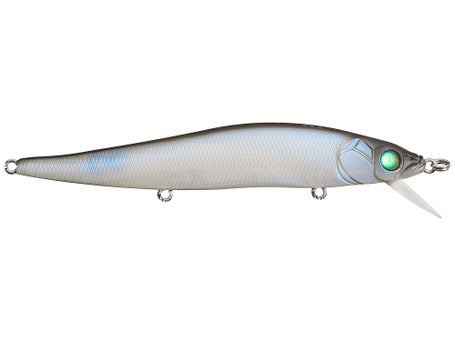 Source: Tackle Warehouse
The biggest recent revolution in Japanese topwater fishing. Crawler baits use side-mounted wings (often metal or resin) that create a crawling, paddling action at slow speeds — mimicking a large insect, small bird, or rodent struggling on the surface.
Why Japan Went Crazy for Crawler Baits
The crawler bait explosion in Japan began around 2018 with Raid Japan's Dodge (ダッジ) and Imakatsu's Aventa Crawler (アベンタクローラー). The category grew so fast that by 2023, every major Japanese lure company had at least one crawler bait in their lineup.
The reason: crawler baits work on pressured fish. Their slow, steady surface disturbance is fundamentally different from the rapid twitching of pencils and poppers. Bass that have learned to avoid "normal" topwater presentations haven't seen enough crawler baits to associate them with danger.
According to 釣りクラウド (Tsuri Cloud), crawler baits were the #1 searched topwater category in Japan from 2022–2025, surpassing traditional poppers.
The Essential Japanese Crawler Baits
Raid Japan Dodge (ダッジ): The lure that started the modern crawler craze. Its hinged aluminum wings produce a distinctive clacking sound and splashing cadence that bass find irresistible. The Dodge is effective at extremely slow speeds — barely moving it produces maximum wing action. Weight: 27g. Length: 114mm. Price: ¥2,200 (~$15 USD). Often sold out; check JDM import sources.
Imakatsu Aventa Crawler (アベンタクローラー): Features a unique rubber wing system that creates a quieter, more subtle crawl than metal-winged designs. Comes in multiple sizes, including an RS (Real Slow) version tuned for the slowest possible retrieve — ideal for cold-water topwater sessions in spring and fall. Price: ¥2,310 (~$16 USD).
Gancraft Jointed Claw 178 Surface (ジョインテッドクロー 178 サーフェス): A surface version of Japan's legendary swimbait. This two-piece, jointed crawler creates an incredibly realistic surface wake that mimics a large baitfish pushing water. At 178mm, it's oversized — targeting trophy bass that ignore smaller presentations. Price: ¥4,950 (~$33 USD).
Jackall Pompadour (ポンパドール): A compact crawler bait with a front-mounted propeller and dual side wings. The propeller adds a high-pitched buzzing sound to the wing-crawling action — a double stimulus that works in low-visibility conditions. Available in Jr. (78mm) and original (90mm) sizes. Price: ¥1,760–1,980 (~$12–13 USD).
Category 4: Prop Baits / Swishers (スイッシャー)
Prop baits feature rotating propellers (front, rear, or both) that create surface disturbance and flash.
The Essential Japanese Prop Baits
Megabass i-Wing 135 (アイウイング135): A revolutionary design that uses adjustable wings (not traditional propellers) to create different surface actions. Wing angle adjustments change the lure from a subtle crawler to a splashing prop bait. This adaptability is uniquely Japanese — one lure, multiple presentations. Weight: 32g. Price: ¥2,310 (~$16 USD).
Smith Kotobuki (ことぶき): A traditional Japanese prop bait with dual propellers (front and rear) and a torpedo body. At 80mm and 12g, it fills the gap between ultralight surface fishing and full-size topwater. The name means "celebration" — a fitting description for what happens when a bass hits this lure on the surface. Price: ¥1,980 (~$13 USD).
Category 5: Buzzbaits (バズベイト)
Buzzbaits feature an overhead blade that churns the surface on steady retrieve. Japanese buzzbaits prioritize casting distance and consistent blade engagement at slower speeds.
OSP Buzz Zero Two (バズゼロツー): The gold standard of Japanese buzzbaits. The counter-rotating dual-blade design produces a unique sound signature that bass haven't heard from single-blade American designs. The "zero two" refers to the optimal retrieve speed — barely enough to keep the blade turning. This slow-speed capability is the key JDM advantage. Weight: 10g. Price: ¥1,100 (~$7 USD).
Evergreen Buzztrick (バズトリック): Features a clacker (a metal arm that hits the blade) producing an erratic clicking-buzzing combination. The finesse approach applied to buzzbaits: quieter than standard models, more effective on educated bass.
Category 6: Noise Baits (ノイジー)
 Photo by JimDegerstrom on Pixabay
Noise baits create maximum surface commotion through body shape, wings, or appendages. They're the loudest topwater category — used when subtlety fails and you need to trigger reaction strikes.
Arbogast Jitterbug (ジッターバグ): While American-designed, the Jitterbug is beloved in Japan and available in JDM-exclusive color patterns. The wide lip creates a rhythmic gurgling/popping sound.
Tiemco Cicada (ティムコ シカダ): A surface lure designed to mimic a cicada — the sound of Japanese summer. Cicada hatches trigger aggressive feeding from late June through August, and this lure matches the profile perfectly. Price: ¥1,430 (~$10 USD).
Seasonal Topwater Strategy from Japan
Japanese tournament pros follow strict seasonal windows for topwater:
Spring (3月–5月)
- Pre-spawn (March): Crawler baits at ultra-slow speed, targeting bass staging on shallow flats
- Spawn (April): Poppers worked near beds — aggression triggers strikes from bed-guarding fish
- Post-spawn (May): Pencil baits on flats as bass begin roaming
Summer (6月–9月)
- Prime topwater season. Surface water temperature above 20°C
- Early morning: Pencil baits, prop baits on calm water
- Midday: Buzzbaits around shade lines and cover edges
- Evening: Crawler baits at the slowest possible speed as light fades
Fall (10月–11月)
- Pencil baits for covering water fast — bass are feeding aggressively before winter
- Larger profiles — upsizing to 100mm+ pencils and poppers matches the larger baitfish schools
Winter (12月–2月)
- Topwater is generally ineffective when water drops below 15°C
- Exception: extremely slow crawler baits on warm, sunny afternoons when surface temp briefly rises
Tackle Setup for Japanese Topwater
Rod
- Length: 6'6"–7'0" (most Japanese topwater rods)
- Power: Medium to Medium-Heavy
- Action: Regular (moderate) — provides the soft tip needed for walking the dog and popping without pulling the lure out of the fish's mouth on the hook set
- JDM recommendation: Megabass Destroyer Evoluzion F3-65X (purpose-built topwater rod)
Reel
- Gear ratio: 6.3:1–7.1:1 (medium retrieval speed)
- Line capacity: enough for 12–16lb line
- JDM recommendations: Shimano Metanium or Daiwa Steez
Line
- Fluorocarbon: 12–16lb — sinks slightly, creating a direct line-to-lure angle. Preferred by many Japanese anglers for pencil baits and poppers.
- Nylon: 14–20lb — floats, creating a surface bow that transmits walking action. Traditional choice.
- PE braid: 30–50lb with fluorocarbon leader — maximum sensitivity for feeling subtle takes, especially with crawler baits. See our line guide for details.
The Hook Set Debate
Japanese topwater convention says: Don't set the hook until you feel the fish. The visual explosion of a topwater strike triggers an instinct to sweep the rod immediately. But many strikes are misses — the bass hits near the lure or takes it partially. Setting the hook at the visual cue pulls the lure away from a fish that hasn't fully committed.
The Japanese rule: see the strike, pause a half-second, feel the weight, then set. This patience converts dramatically more strikes to hookups. Tournament data from Japanese B.A.S.S. federation events suggests a 40% higher hookup rate using delayed sets versus reactive sets on topwater.
Building a Japanese Topwater Collection
Starter Kit (5 Lures — All Situations Covered)
| Lure | Type | Weight | Price | Use Case |
|---|---|---|---|---|
| Lucky Craft Sammy 100 | Pencil | 12.4g | ¥1,540 | Open water walking |
| Megabass Pop-X | Popper | 7g | ¥1,870 | Precision popping |
| OSP Buzz Zero Two | Buzzbait | 10g | ¥1,100 | Cover water fast |
| Raid Japan Dodge | Crawler | 27g | ¥2,200 | Slow presentation |
| Jackall Pompadour Jr. | Crawler/prop | 18g | ¥1,760 | Low light conditions |
Total starter collection: ¥8,470 (~$57 USD)
Compare that to a single premium American topwater lure at $12–18. The value proposition of JDM topwater is remarkable. For related lure categories, see our best JDM lures guide and OSP vs Megabass vs Jackall comparison.
Related Reading
- Deps: Japan's Big Bait Brand for Trophy Hunting
- Lake Biwa: Japan's Biggest Bass Lake and How to Fish It
- Mid-Strolling: Japan's Deepwater Technique
Frequently Asked Questions
What is the best Japanese topwater lure for beginners? The Lucky Craft Sammy 100 is the most forgiving Japanese topwater lure for beginners. Its internal weight transfer system makes walking the dog easier than with more advanced designs, it casts well even with imperfect technique, and the moving weight creates a clicking sound that adds fish-attracting noise. At ¥1,540 (~$10 USD), it's also affordable enough to use without anxiety about losing it to a snag. Once you're comfortable with the Sammy, graduate to the Megabass Pop-X for popping technique and the Raid Japan Dodge for crawler fishing.
Why do Japanese topwater lures cost less than American premium lures? Japanese domestic retail prices for bass lures are kept competitive by intense market competition — there are hundreds of lure companies in Japan targeting a dedicated bass fishing population of approximately 3.5 million anglers. When purchased in Japan or through Japanese retailers, lures from Megabass, OSP, and Jackall typically cost ¥1,500–2,500 (~$10–17 USD). However, these same lures often retail for $15–25+ in US tackle shops due to import costs, distributor margins, and limited availability. Buying directly from Japanese retailers through proxy services can save 30–40%.
What's the difference between Japanese and American topwater lure design philosophy? American topwater design tends to prioritize maximum disturbance — louder pops, wider walks, more aggressive action — based on the assumption that noise attracts fish. Japanese design prioritizes precision and versatility — quieter presentations, tighter actions, and the ability to fish at slower speeds. Neither approach is universally better; the choice depends on fishing pressure. On heavily fished waters, Japanese designs consistently outperform. On lightly pressured water, the louder American style can be equally or more effective.
When is the best time to fish Japanese topwater lures? The prime window is June through September when surface water temperatures exceed 20°C (68°F). Within each day, the low-light periods — first hour after sunrise and last hour before sunset — produce the most consistent topwater action. However, Japanese anglers also fish topwater successfully during midday in summer (targeting shaded areas) and during spring pre-spawn (using slow crawler baits). Overcast days extend the productive topwater window throughout the day.
Can I use Japanese topwater lures for species other than bass? Absolutely. Japanese topwater lures are highly effective for a range of species. Pencil baits and poppers in the 70–100mm range work well for striped bass, bluefish, and snook. Smaller pencils (50–65mm) catch pike, musky, and peacock bass on topwater. Buzzbait and crawler designs work for any predator that feeds on or near the surface. In Japan, many of these same lures are used for saltwater seabass (シーバス/スズキ) fishing with excellent results.
— The JDM Tackle Lab Team