Megabass: The Story Behind Japan's Most Innovative Lure Company
- Megabass (メガバス) was founded in 1986 by Yuki Ito (伊東由樹), a designer-angler who revolutionized Japanese bass fishing with lures that combined art-level aesthetics with engineering precision
Quick Answer
- Megabass (メガバス) was founded in 1986 by Yuki Ito (伊東由樹), a designer-angler who revolutionized Japanese bass fishing with lures that combined art-level aesthetics with engineering precision
- The Pop-X popper, released in 1997, became the most hyped fishing lure in Japanese history — selling out instantly, creating a secondary market, and establishing Megabass as a cultural phenomenon beyond fishing
- Megabass lures are designed in-house using 3D CAD modeling and tank-tested before prototyping, a process that takes 12–24 months per model and explains the cult following among detail-obsessed JDM anglers
- The company generates estimated annual revenue of ¥5–8 billion (~$34–54 million USD) from lures, rods, reels, apparel, and licensing — making it one of the largest independent lure companies in the world
The Founder: Yuki Ito (伊東由樹)
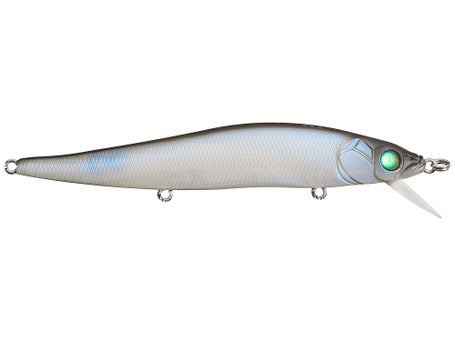
Source: Tackle Warehouse
You can't understand Megabass without understanding Yuki Ito. He isn't just a CEO — he's the head designer, the public face, the fishing philosopher, and the competitive angler rolled into one. In Japanese fishing culture, he occupies a position closer to fashion designer than corporate executive.
Born in 1962 in Hamamatsu, Shizuoka Prefecture, Ito grew up near Lake Hamana — one of Japan's premier bass fisheries. He started fishing as a child and quickly became frustrated with the crude, mass-produced lures available in Japan during the 1970s and early 1980s. Most bass lures at the time were imported American designs — effective but aesthetically rough and poorly adapted to Japan's clear, pressured waters.
Ito's insight was that Japanese bass fishing demanded a different approach. American lures were designed for vast, relatively unpressured lakes. Japanese lakes were smaller, clearer, and fished by orders of magnitude more anglers per square kilometer. Bass in these waters wouldn't react to loud, obvious presentations. They needed subtlety.
So Ito started making his own lures. In his workshop (some accounts say garage, some say a small rented room), using handcarved balsa wood, he began prototyping lures with thinner profiles, more realistic finishes, and more nuanced action than anything commercially available.
The results on the water were immediate. Ito consistently caught fish that ignored other anglers' presentations. Word spread through Japan's tight-knit bass fishing community. People wanted his lures.
In 1986, Ito formalized the operation as Megabass — the name a play on "mega" (big/great) and "bass" (the target species). From the beginning, the company's identity was inseparable from Ito's design philosophy: lures should be beautiful objects first, fishing tools second, and the beauty serves the function.
The Design Philosophy
Megabass's approach to lure design breaks from industry norms in several ways:
1. Designer-Led, Not Market-Led
Most lure companies study market trends, identify gaps, and design products to fill them. Megabass designs start with Ito's vision — often inspired by observing baitfish behavior, water conditions, or a technical problem he wants to solve. The market follows the design, not the other way around.
This approach produces more failures (designs that don't sell) but also more breakthroughs (designs that create entirely new categories).
2. Obsessive Internal Weight Systems
Megabass's signature engineering contribution is internal weight transfer systems. Before Megabass, most lures were static — the weight was molded in place. Megabass introduced moving weight systems (Multi-Way Moving Balancer, LBO — Linear Bearing Oscillator) where internal tungsten balls shift during casting and retrieval.
During casting: Weights slide to the rear, moving the center of gravity backward for maximum casting distance. During retrieval: Weights move forward or settle center, creating the optimal swimming action.
The LBO (Linear Bearing Oscillator) system, introduced in 2016, uses actual ball bearings on a linear rail — an engineering solution borrowed from industrial machinery that no other lure company had attempted. The result: Megabass lures cast 10–20% farther than competitors of the same weight class, according to independent testing by Japanese fishing media.
3. Photorealistic Finishes
Megabass was among the first companies to use multi-layer, photorealistic paint jobs on lures. Their "Ito Tennessee Shad" and "GP Phantom" color patterns use up to 12 separate paint layers, including metallic undercoats, holographic films, and UV-reactive clear coats.
The philosophy: if a bass inspects a lure at close range in clear water (which Japanese bass frequently do), the finish needs to withstand scrutiny. A blurry, generic paint job triggers rejection. A precise, multi-tone finish creates the fraction-of-a-second hesitation that converts inspection to strike.
4. Tank Testing
Every Megabass lure prototype is tested in an indoor water tank at the Hamamatsu facility before any field testing. High-speed cameras record the lure's action at various retrieve speeds. Ito personally evaluates each prototype, often requesting modifications measured in 0.1mm increments of lip angle or weight placement.
This level of pre-production testing is standard in Japanese premium lure companies (see our OSP vs Megabass vs Jackall comparison) but rare or nonexistent among American and European manufacturers.
The Iconic Lures
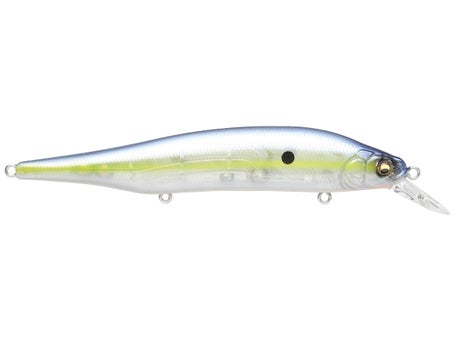 Source: Tackle Warehouse
Pop-X (ポップX) — 1997
The lure that changed everything. The Pop-X isn't just a Megabass icon — it's a Japanese fishing icon, period.
The design: A 64mm, 7g popper with a shallow, precisely angled cup. The cup shape was revolutionary — instead of the deep cups on existing poppers that created big, splashy pops, the Pop-X's shallow cup produced a tight, controlled spit of water that mimicked a small baitfish breaking the surface.
The mania: When the Pop-X launched, demand exceeded supply by an estimated 100:1. Tackle shops limited purchases to one per customer. A secondary market erupted where new-in-box Pop-Xs sold for ¥3,000–5,000 — two to three times retail. The "Pop-X phenomenon" was covered by mainstream Japanese media, not just fishing publications.
Why it endures: Nearly 30 years later, the Pop-X remains in production and remains one of the most-sold poppers in Japan. Its design has been imitated by dozens of companies but never exactly replicated — the specific cup geometry and internal weight arrangement create an action that competitors struggle to match. It's still relevant in our topwater lures guide as an essential purchase.
Price: ¥1,870 (~$13 USD) — remarkably affordable for its quality and legacy.
Vision 110 (ビジョンワンテン) — 2003
A 110mm, 14g jerkbait (ジャークベイト) that redefined the category. The Vision 110's innovation was its "slow floating" buoyancy — hovering just below the surface rather than floating up or sinking. Combined with an erratic darting action on twitches, it mimicked a wounded baitfish with uncanny realism.
The Vision 110 became a global hit — it's one of the few JDM lures that crossed over to mainstream American bass fishing. American tournament anglers began importing it years before Megabass established US distribution.
Price: ¥1,870 (~$13 USD).
Dog-X (ドッグX) — 1999
A pencil bait that introduced the diamond cross-section body — a shape innovation that changed how the lure moves through water compared to round-body pencils. The angular body creates sharper directional changes during walking the dog, producing a tighter, more controlled walk that triggers bass in clear, pressured conditions.
The Dog-X line has expanded to include the Diamante, Jr., and Speed Slide versions, each tuned for different water conditions. It remains essential in any Japanese topwater collection.
Price: ¥1,760 (~$12 USD).
Ito Shiner (イトシャイナー) — 2010
Named after its creator, the Ito Shiner is a 115mm jerkbait designed for one specific purpose: catching the biggest bass in the lake. Its subtle, tight shimmy action at ultra-slow retrieve speeds targets trophy fish that won't chase aggressive presentations.
On Lake Biwa — Japan's trophy bass destination — the Ito Shiner has accounted for multiple 60cm+ (10lb+) catches. It's the lure that guides and local experts reach for first in winter and early spring when big bass are sluggish and selective.
Price: ¥1,870 (~$13 USD).
Dark Sleeper (ダークスリーパー) — 2015
A paradigm-shifting swimbait designed to swim upside down. The hook rides on top (instead of the usual bottom-mounted position), allowing it to be dragged slowly across rocky bottoms without snagging. The action mimics a goby — a bottom-dwelling baitfish that bass in Japanese rivers and lakes feed on heavily.
The upside-down design wasn't just clever — it opened a new tactical space. Anglers could now fish soft-bottom lures directly on structure where conventional designs would snag immediately. The Dark Sleeper became a staple of Japanese river bass fishing.
Price: ¥880 (~$6 USD) — unusually affordable for Megabass.
Megabass Beyond Lures
Rods: The Destroyer Series
Megabass produces its own rod line, anchored by the Destroyer Evoluzion series. These rods feature Megabass's proprietary blank construction technology and are designed to pair with specific Megabass lure categories:
- F1-63XS: Light finesse rod for neko rigs and small soft plastics
- F3-65X: Topwater specialist
- F5-610X: Jerkbait specialist (optimized for Vision 110)
- F7-70X: Heavy cover rod for big baits like Deps
Price range: ¥30,000–55,000 (~$202–371 USD) — premium but competitive with other Japanese rod manufacturers.
Reels
Megabass introduced its own baitcasting reels, though they remain a smaller part of the business compared to lures and rods. The partnership with Shimano's OEM capabilities allows Megabass to offer reels with competitive internal quality.
Apparel and Accessories
Megabass treats its apparel line like a fashion brand, not afterthought merchandise. Ito's design aesthetic extends to clothing — the Megabass logo and graphics have become a fashion statement in Japanese fishing culture. Limited-edition collaboration items regularly sell out.
Megabass in the Global Market
 Source: Tackle Warehouse
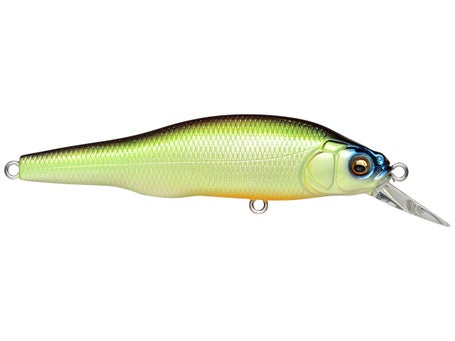
Megabass established a US subsidiary (Megabass of America) in the 2000s, initially struggling against established American lure brands. The breakthrough came when American tournament anglers began winning events with Megabass lures — particularly the Vision 110 — generating grassroots credibility.
Today, Megabass products are available in:
- Japan: Full lineup through all major tackle shops and online
- USA: Expanding distribution through Bass Pro Shops, Tackle Warehouse, and specialty JDM retailers
- Europe: Growing presence in France and Italy (strong bass fishing cultures)
- Asia: Strong in Thailand, Taiwan, and South Korea
For importing JDM-exclusive Megabass products not available in your country, see our buying from Japan guide.
The Megabass Effect on the Industry
Megabass's influence extends beyond its own products:
Design competition: Megabass's success forced every Japanese lure company to elevate their engineering and aesthetics. The entire Japanese lure industry — OSP, Jackall, Deps, Lucky Craft, Evergreen — operates at a higher design standard partly because Megabass set the bar.
Internal weight transfer adoption: After Megabass proved the effectiveness of moving weight systems, virtually every Japanese lure company developed their own versions. It's now a standard feature across the industry.
Finish quality escalation: Megabass's photorealistic paint jobs raised expectations for all lure finishes. Japanese consumers now expect multi-layer, detailed finishes as baseline quality — a standard that many non-Japanese manufacturers still don't meet.
Direct-to-consumer model: Megabass was early in leveraging social media and its own website for direct sales and community building, a model now adopted across the Japanese tackle industry.
Related Reading
- Best JDM Lures That Changed Bass Fishing
- OSP vs Megabass vs Jackall: Japanese Lure Makers Compared
- Japanese Baitcasting Reels: Shimano and Daiwa JDM
Frequently Asked Questions
What is the best Megabass lure for beginners? The Pop-X (¥1,870 / ~$13 USD) is the best entry point into Megabass. It's affordable, effective across all skill levels, and teaches fundamental topwater technique (popping/spitting). The lure's design forgives imperfect rod work — you'll get decent action even with basic technique, and the action improves as your skill develops. The Vision 110 is the next step — a jerkbait that rewards learning twitching cadence and is effective year-round.
Why are Megabass lures so popular in Japan? Megabass hits a unique intersection of engineering, aesthetics, and cultural cachet. The lures are genuinely well-designed and effective — the internal weight systems, precise actions, and photorealistic finishes serve real fishing functions, not just marketing. But beyond performance, Megabass carries cultural weight in Japanese fishing similar to what Nike carries in sneaker culture — owning Megabass signals that you take bass fishing seriously. Yuki Ito's visibility as a designer-angler-personality amplifies this effect.
How do Megabass lures compare to OSP and Jackall? All three are tier-one Japanese lure companies, but they have different strengths. Megabass excels in hard bait engineering (jerkbaits, topwater, crankbaits) with industry-leading internal weight systems and finishes. OSP (headed by Toshinari Namiki) is strongest in technique-specific lures — their soft plastic rigging innovations and specialized designs for Japanese finesse techniques are unmatched. Jackall offers the widest product range at competitive prices, with a focus on versatility and value. Many Japanese anglers use all three brands, selecting each for its strengths.
Are Megabass lures worth the price compared to cheaper alternatives? At ¥1,500–2,000 (~$10–14 USD) at Japanese retail, Megabass lures are priced only slightly above mass-market options and well below what "premium" means in many Western markets. The engineering — weight transfer systems, balanced action, multi-layer finishes — genuinely performs better than cheaper alternatives in controlled testing. Where the value proposition gets questioned is at US retail prices ($15–22+), where import and distribution margins inflate costs. Buying directly from Japanese retailers through proxy services restores the value equation.
Does Megabass make saltwater lures? Yes. While bass lures are the core business, Megabass produces saltwater-specific designs including the X-80 Trick Darter (seabass/シーバス), the Metal-X series (shore jigging), and various offshore jigs. These saltwater lures apply the same engineering philosophy — internal weight transfer, precise action tuning, premium finishes — to marine species. The saltwater line is smaller than the freshwater lineup but growing as Japanese saltwater lure fishing expands.
— The JDM Tackle Lab Team